
eSIM Security Risks – Are eSIMs Safe?
 0
0
 0
0
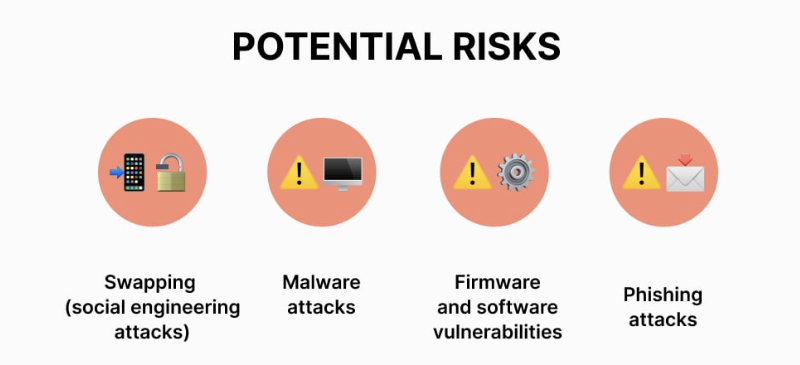
Digital SIMs eliminate entire categories of threats that we are used to associating with physical variations. eSIMs cannot be stolen, removed, or cloned by traditional methods. eSIM security risks include classic threats – phishing to gain access to accounts, social engineering, and fake QR codes, and non-trivial ones, such as compromising operator servers (SM-DP+) for remote profile retrieval and exploiting vulnerabilities in the device’s Secure Element.
One of the crucial points of security strategy is choosing a reliable and trustworthy provider according to the use case – whether it’s an IoT digital SIM, temporary package, or a global data plan for travel by international providers like Ohayu, Airalo, Nomad, or Saily. In this article, we’ll explore and compare eSIM vulnerabilities and precautions users can take to reduce them.
eSIM vs. Physical SIM Security – Which One Is Safer?
When compared objectively, embedded SIM demonstrates structural advantages in safety and eliminates the key risks of physical analogues. There is no need to worry about theft or cloning. The main vulnerability of electronic SIM cards shifts to the protection of the operator’s account and the digital hygiene of the device owner.
| Safety risk | Embedded SIM | Physical SIM card |
| Unauthorized Access | Hacking of the device or operator account. Direct access to the profile is blocked. | Physical theft of a card or forgery of documents for reissuance. |
| Identity Theft | Remote activation in the user’s name. | Obtaining a duplicate through social engineering. |
| Swapping | Full control of the operator’s account is mandatory. | The primary method is through the carrier’s call center. |
| LPA Exploit | A vulnerability in the device’s software could lead to profile hijacking. (Device’s SE) | Not applicable. There is no profile manager software. |
| Malware & Device Exploits | Attack vector on communication software (modem, SE) | Physical access is required. |
| Cloning | Practically impossible. It would require hacking the operator’s infrastructure. | Breaches are still possible. |
| Roaming Protocol Attacks | SS7 and Diameter protocols – a common weakness of networks. | The issue is in the network infrastructure. |
| Fake QR Codes | Specific risk at the activation stage. | Not applicable. |
| Software Vulnerabilities | Vulnerabilities in modem software, TEE, or SE. | Weaknesses in SIM chip firmware. |
| Network Sniffing | Interception of activation data during profile download via an unsecured connection. | Inapplicable. |
In the next section, we will examine each of the listed threats in turn. We will start with the most common scenarios, such as account compromise and phishing, and move on to complex and rare attacks. It will help us understand not only the nature of each vulnerability, but also the specific measures that minimize its likelihood.
eSIM Security Risks

To make eSIM security risks as straightforward as possible to understand, we have divided them into three groups:
- Infrastructure and Network;
- Device and user interaction;
- Identity and profile.
Below, we describe each option in more detail.
Infrastructure and Protocol Flaws
Roaming protocol attacks
Unfortunately, eSIMs in roaming still inherit all the historical vulnerabilities of global signaling protocols such as SS7 and Diameter. Through a compromised partner operator, an intruder can intercept traffic or send unauthorized requests to update the profile. However, this requires access to the telecom infrastructure.
Network sniffing
Theoretically, data can be intercepted during download if activation takes place over an unsecured channel. In practice, all reputable providers use strict TLS encryption, which minimizes this risk. Modern GSMA SGP.32 standards-based consumer RSP analysis strictly regulates this process, but the risk remains in custom implementations.
Software vulnerabilities
Problems in low-level modem software or the device’s trusted execution environment (TEE) can open the way to eSIM isolation. These are complex and rare attacks, comparable in difficulty to OEM-specific bootloader exploits.
Device and User Interaction
Unauthorized access
Theft or hacking of an operator’s account is the most direct way to compromise an embedded SIM. Unlike a physical card, an attacker does not need to remove it; everything is done remotely. Therefore, the safety of the Consumer IoT Platform used by the carrier for self-service is critically essential.
Malware & device exploits
Specialized malware can target digital SIM management components. Often, the goal is to intercept RES, AUTN, or modify APDU commands.
LPA exploit
Local Profile Assistant is a key system component for managing eSIMs. A vulnerability in it could allow a Time-of-Check Time-of-Use (TOCTOU) attack and profile substitution at the moment of activation. However, such moments require unique conditions and are practically unheard of.
Fake QR codes
Here, the fake QR code leads to a fake SM-DP+ Server or contains a malicious activation link. Modern systems use Digital Signatures for QR codes, but many services skimp on this feature.
Identity and Management
Identity theft
Stolen identity details are used to remotely create an account in the victim’s name. This is particularly dangerous for eSIMs, as the process is entirely remote. Fraudsters use information from database leaks or phishing to initiate automated provisioning, impersonating a legitimate customer.
Swapping
The attackers use social engineering and the victim’s data. They convince the operator to transfer the number to a new eSIM. Protection is based on Multi-Factor Authentication (MFA) using hardware tokens, but many still rely on SMS-based OTP, which creates a recurring vulnerability.
Cloning
The cryptographic architecture of eSIM and the hardware isolation of eUICC make classic cloning virtually impossible. Realistic circumvention scenarios are not related to Ki extraction and boil down to compromising the operator’s or GSMA PKI infrastructure, which is an extreme level of attack and far beyond common threats.
How to Reduce eSIM Security Risks?
Effective protection and resistance to various types of hacking risks is based on a multi-layered approach, where each subsequent layer protects the previous one. It is not difficult and only requires an understanding of the basics. We suggest focusing on four key areas.
Device protection
Regular OS and modem firmware updates close critical vulnerabilities in the communication stack. Always use a hack-resistant screen lock, such as a long numeric PIN or biometrics. Try to control all installed applications and limit permissions. Immediately eliminate software from unverified sources to exclude the risk of harmful interference.
Account safety
Activate and set up a unique code to access the operator’s services (PIN/PUK). However, the main shield is two-factor authentication (2FA) in your personal account. You can also replace SMS codes with authenticator apps (Google Authenticator) or hardware keys. This simple measure makes it virtually impossible to remotely breach your number through a call center or hack your account.
Activation
Download electronic profiles exclusively through official service applications such as those provided by 1Global or verified websites. Avoid scanning QR codes from unconfirmed sources. Refraining from using public Wi-Fi during activation protects against MITM attacks that can intercept one-time tokens. It is better to use your own mobile internet or a protected home connection for this purpose.
Travel-specific tips
It is better to resort to situational access differentiation here. Purchase eSIM packages for the internet only, like Ohayu data-only plans for travel. It is better to keep your number on your main physical SIM card. This approach isolates the potential compromise of the temporary electronic identifier from access to banking applications and services. This creates an effective security perimeter.
Who Should Be Extra Cautious with eSIM Security Risks?
Particular caution when using embedded SIMs should be exercised by those whose activities or status make them likely victims of targeted attacks. These include journalists, human rights defenders, and public activists whose communications require protection. Top managers of companies whose phone numbers are often the key to corporate systems should also be cautious. Many businesses that use eSIM on a large scale are now privately implementing enterprise solutions such as Onomondo.
For the vast majority of ordinary users and travelers, the risks are not targeted, and there is often no need to worry. Compliance with the basic security measures described above is sufficient for the safe use of the technology.
Summing up: Are eSIMs safe in 2026?
Embedded SIM remains a secure and recommended choice in 2026. Their fundamental architecture eliminates key eSIM security risks of physical analogues, such as theft and cloning. The most likely risks associated with social engineering and account protection are effectively mitigated by users’ conscious adherence to digital hygiene. The technology continues to evolve toward greater standardization and built-in protection. This makes it a convenient and reliable foundation for mobile communications.
eSIM Safety Risks – FAQs
Are eSIMs safe?
eSIMs are safer than physical cards, as they eliminate the risks of theft and swapping. The main threats are related to protecting your account with the carrier.
Can an eSIM be hacked or cloned?
Practically no. Cloning is architecturally impossible, and hacking requires a unique exploit that is inaccessible to ordinary criminals.
What if your phone is lost or stolen?
Immediately block the account remotely through the operator. This is faster than reissuing a physical card.
How to reduce eSIM safety risks?
Compulsory 2FA via the carrier’s account app. Additionally, use hardware device locking and regularly check active sessions in your personal account.
What is safer, eSIM or a physical SIM?
eSIMs are more secure. They do not have the main disadvantages of physical cards – removal and direct cloning.
Artificial Intelligence – The Data Scientist