How an AI Search Agency Measures Success Once Rankings Stop Telling the Full Story
 0
0
 0
0
For twenty years, “success” in search had a fairly stable definition. A page either ranked on page one or it didn’t. Traffic, conversions, and revenue could all be traced back to a position on a results page. That model is starting to break down, and not gradually. An SEO agency in Toowoomba and Brisbane recently ran an audit where a client’s traditional rankings hadn’t moved in months, yet AI-driven referral traffic had tripled. The rankings dashboard said nothing had changed. The reality was quite different.
This is the measurement problem an AI search agency now has to solve. Ranking position still matters for classic search, but it says almost nothing about whether a brand is being surfaced, summarised, or cited inside an AI-generated answer. New metrics are needed, and most of them are still being figured out in real time.
Why Rank Tracking Alone No Longer Tells the Full Story
A page can rank on page one of Google and never appear in an AI Overview, a ChatGPT Search result, or a Perplexity answer. Conversely, a page ranking on page two or three can still get pulled into an AI-generated summary if it answers the underlying question clearly and is structured in a way the model can extract easily.
The two systems draw on overlapping but different signals. Rank tracking measures position against a query. AI visibility measures whether a model chose to reference a source at all, and how prominently. Treating the second as a subset of the first leads to a lot of wasted effort chasing rankings that no longer correlate with the outcome that actually matters, which is being the source an AI system trusts enough to mention.
Tracking Share of Voice Inside AI Answers
One of the more useful replacement metrics is a version of share of voice, adapted for AI outputs. Instead of asking “where do we rank for this keyword,” the question becomes “how often does our brand, or our content, get mentioned when this question is asked across different AI search tools.”
This is done by running a consistent set of representative questions, the kind real customers would plausibly ask, through tools like ChatGPT Search, Perplexity, and Google’s AI Overviews on a regular cadence, then logging whether the brand appears, in what context, and alongside which competitors. It’s manual and a little tedious compared to automated rank trackers, though several AI monitoring tools are starting to automate parts of this process. The results still tend to be noisier than traditional rank tracking, since outputs can shift between sessions and providers, but tracked over weeks and months a pattern usually emerges.
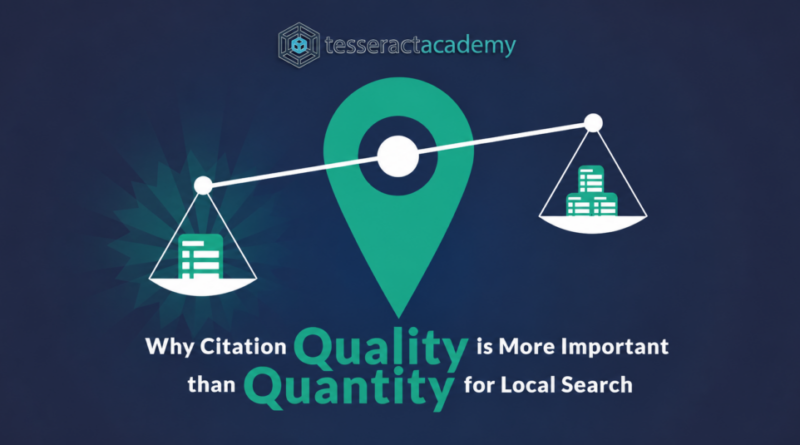
Citation Quality Matters as Much as Citation Frequency

Being mentioned isn’t the same as being mentioned well. An AI search agency generally tracks a few layers of citation quality rather than a single yes or no:
– Is the brand named directly, or is it folded into a vague “some providers suggest” phrasing?
– Is the citation linked, or just referenced by name with no click-through path?
– Does the surrounding context in the AI-generated answer align with how the brand would want to be positioned, or does it misrepresent the source?
– Is the brand the primary source cited, or one of several competing citations in the same answer?
A brand that gets named directly and linked in three out of ten test queries is often in a stronger position than one that gets a vague mention in eight out of ten, even though the second number looks better on paper.
Referral Traffic From AI Platforms Is Its Own Category Now
Most analytics platforms now let you isolate traffic coming from AI search tools as a distinct channel, separate from organic search and direct traffic. This is one of the more concrete, non-speculative metrics available, since it’s actual visit data rather than a sampled snapshot of test queries.
Worth watching here: session quality. Traffic arriving via an AI-generated answer often behaves differently to traffic arriving via a traditional search click. Visitors sometimes arrive with more context already established, since the AI answer may have already explained the basics, which can change bounce rate and time-on-page in ways that don’t map neatly onto historical benchmarks. Comparing AI-referred sessions against organic-referred sessions on the same page is more useful than judging AI referral traffic against old organic benchmarks.
Structural and Technical Health as a Leading Indicator
Because AI visibility can be volatile and slow to show up in analytics, many practitioners track upstream technical signals as leading indicators rather than waiting for traffic data to confirm whether something worked. This includes:
– Confirming AI crawlers (GPTBot, ClaudeBot, PerplexityBot, and similar) are actually accessing key pages, checked via server logs
– Auditing whether schema markup is present and valid on high-value pages
– Reviewing whether content answers questions in extractable, self-contained sections rather than requiring the full page to be read for context
None of these guarantee a citation, but a site failing on all three is very unlikely to show up in AI answers regardless of content quality, so they function as a useful early filter before spending time on content-level optimisation.
Building a Measurement Framework That Doesn’t Rely on One Number
Given how fragmented and immature these metrics still are, the more reliable approach is a small dashboard combining several imperfect signals rather than betting everything on one. A reasonable starting point looks like:
1. Traditional rank tracking, for queries where classic search still drives meaningful traffic
2. A recurring share-of-voice check across two or three AI search tools for the brand’s core topics
3. AI-referral traffic and engagement, tracked as its own channel
4. Technical health checks confirming AI crawlers can access and parse key content
No single metric here is as clean as “we rank number one,” and that’s arguably the honest state of AI search measurement right now. Anyone selling a single definitive AI ranking number should be treated with some scepticism, since the underlying systems are opaque and change without notice.
The Takeaway
Rankings aren’t dead, but they’ve stopped being a complete picture of visibility. An AI search agency working in this space now has to combine several partial, sometimes noisy signals into a coherent view of whether a brand is actually showing up where its audience is asking questions. It’s messier than the old model, but it’s a more honest reflection of how search actually works today.
Artificial Intelligence – The Data Scientist