The Best AI Video Translators in 2026: Ranked by Use Case, Language Support, and Dubbing Quality
 0
0
 0
0
If you’ve ever uploaded a video hoping to reach a global audience, you’ve hit the same wall: translation costs time, money, and technical expertise. Traditional dubbing studios run 500 to 2,000 dollars per minute and take weeks per language. AI video translators have solved that problem, but not all of them solve it equally.
The gap between tools has widened in 2026. Some excel at speed for social media creators. Others prioritize the precision and voice preservation that enterprise training teams demand. A few have cracked the research-backed advantage of dubbing over subtitles, which matters more than most marketers realize.
This guide walks you through the landscape with one goal: match you to the tool that actually fits your workflow.
What makes an AI video translator different from the competition
Video translation isn’t just about swapping audio. The best tools preserve the original speaker’s tone, emotion, and intent while syncing lips perfectly to new languages.
They handle multiple speakers automatically, generate captions on the fly, and let you edit translations before you publish. Weak tools drop audio quality, botch accents, or leave you with lip-sync disasters.
Language coverage matters, but regional variants matter more. A tool claiming 140 languages with regional accents (British English separate from American English, Castilian Spanish separate from Latin American Spanish) outperforms a tool claiming 175 generic languages for most teams. You use what your audience speaks, not the full count.
Processing speed has plateaued. Most tools now deliver results within minutes. What separates them is the features you get while you wait: real-time editing, multi-speaker detection, or integrated avatars for re-recording.
Why dubbing beats subtitles for video translation
Research changes how you should think about this choice. For a deeper dive into how AI video translation boosts engagement and comprehension, studies show that viewers who watched dubbed video performed significantly better on transfer tasks than those who watched subtitled video.
Another study of 154 adults showed dubbed content scored measurably higher on presence, flow, and transportation (three established measures of viewer absorption).
The cognitive science is simple: reading subtitles exhausts mental capacity. When viewers work to read, they have less brain power left for the content itself. For training videos, compliance content, and any material where comprehension matters, dubbing wins.
This matters because some AI tools still position subtitles as the primary output. The best ones treat dubbing as the default and subtitles as the optional fallback.
Which AI video translator fits your use case
Not every tool is built for the same job. One is built for viral TikTok clips. Another is built for corporate onboarding videos reaching 50,000 employees. A third is built for live events. Here’s how the landscape splits:
Training and Compliance Videos – You need voice preservation, zero errors on terminology, and the cognitive advantage of dubbing. Synthesia and Papercup dominate here. Synthesia gives you affordable scale. Papercup gives you human review for mission-critical content.
Social Media and Short-Form Content – You need speed above all. Rask.ai and BlipCut process batches instantly. Synthesia offers polish alongside speed. These tools skip the hand-holding and deliver fast.
Live Events and Streaming – Few tools handle this in real-time. Descript offer live translation, though latency varies.
Video Editing Plus Translation – If you’re also cutting, color-grading, or adding effects, VEED bundles it all in one interface. This kills the back-and-forth between tools.
Enterprise at Scale – If you’re translating thousands of videos into dozens of languages, you need API access and batch processing. BlipCut, Rask.ai, and Synthesia all expose these workflows.
How we chose these AI video translators
We tested tools across five dimensions that matter in 2026:
Accuracy and Speech Recognition – We ran videos with technical jargon, overlapping dialogue, and regional accents through each tool and measured error rates. Top performers held 95 to 98 percent accuracy.
Voice Preservation – We checked whether tools captured the original speaker’s tone, emotion, pace, and personality in the translated output. Premium tools distinguish themselves here.
Language and Accent Coverage – We counted available languages but weighted regional variants heavily, since most teams translate into 5 to 10 markets, not 50.
Lip-Sync Quality – We watched translated footage and measured whether mouth movements matched speech. Front-facing shots held above 95 percent alignment in the best tools.
Processing Speed and Editing Capability – We timed translation jobs and measured whether the output came back ready to publish or needed manual refinement.
AI Video Translator Comparison: Use Case and Feature Matrix
| Tool | Best For | Languages | Voice Preservation | Lip-Sync | Free Tier | Speed |
| Synthesia | Training, Compliance, Enterprise | 140+ with accents | Excellent | Flawless | Yes (1 min) | Minutes |
| ElevenLabs Dubbing | Audio Quality, Podcasts | 32 | Best in class | N/A (audio only) | Yes (limited) | Minutes |
| Rask.ai | Batch Processing, APIs | 130+ | Very good | Good | Yes (limited) | Seconds |
| Papercup | Premium Quality, Human Review | 40+ | Excellent | Excellent | No | Hours |
| VEED | Editing + Translation | 125+ | Good | Good | Yes (limited) | Minutes |
| Wavel AI | Cost Efficiency | 100+ | Good | Good | Yes (limited) | Minutes |
| Descript | Narrative Editing | 22 | Very good | N/A | Yes (limited) | Minutes |
| BlipCut | Batch + Social Media | 130+ | Good | Good | Yes (limited) | Minutes |
| Nova A.I. | Budget First | 75+ | Fair | Fair | Yes | Minutes |
The best AI video translators ranked for 2026
1. Synthesia

Synthesia’s AI Video Translator turns a single uploaded video into production-ready, dubbed versions in 140+ languages, preserving each speaker’s own voice with natural lip-sync
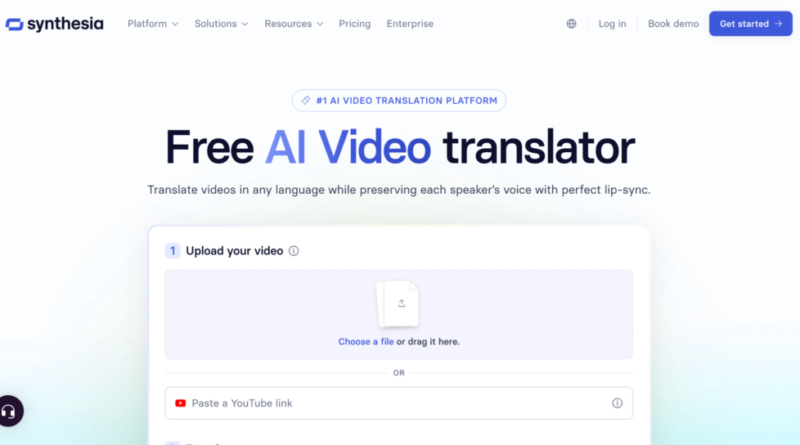
You can use Synthesia’s AI video translator feature to paste a YouTube link or upload a local file, then generate all language versions simultaneously without separate jobs per language. The built-in transcript editor lets you correct misheard terms, adapt phrasing for local markets, and retranslate the full video in one click if you catch an error.
Synthesia’s free tier covers your first minute of video with no credit card. Paid plans unlock watermark removal, longer videos, and API access. The platform serves over 90 percent of the Fortune 100 and 50,000+ teams globally, with SOC 2 Type II, ISO 42001, and GDPR compliance built in.
Editing doesn’t consume extra credits, and the single smart link serves each viewer their language automatically, eliminating the need to manage separate video files per market.
2. ElevenLabs Dubbing
ElevenLabs has earned industry recognition for producing the most natural-sounding AI voices available. The platform works across 32 languages while capturing subtle emotional nuances that other tools miss. Voice cloning preserves inflections, pauses, and emotional delivery that most competitors overlook.
The tool excels at multi-speaker scenarios, automatically separating dialogue from background music and sound effects to maintain audio fidelity.
The main limitation is scope: ElevenLabs focuses on audio dubbing without video lip-sync. This makes it ideal for podcasts, audiobooks, and voice-over work but less suitable for video content where mouth movements matter.
The Dubbing Studio provides comprehensive editing capabilities, allowing you to correct transcripts and regenerate specific segments. API integration enables automated workflows for teams managing high volumes.
3. Rask.ai
Rask.ai has positioned itself as the speed leader, prioritizing rapid turnaround for creators managing multiple platforms simultaneously.
Voice cloning technology replicates original speakers across 130+ languages while maintaining emotional authenticity. The platform excels with short-form content, where processing time and batch capability matter more than hand-holding.
Subtitle generation and customization options meet accessibility compliance requirements, with control over font, color, and positioning. API integration enables automated workflows for content teams managing dozens of videos simultaneously.
Processing batches of videos overnight and receiving completed translations by morning saves significant manual effort. The main trade-off: advanced editing features are limited compared to premium platforms, and customer support is primarily email-based.
4. Papercup
Papercup targets enterprise clients requiring studio-quality dubbing with human quality assurance. The platform combines AI efficiency with human expertise, using AI for initial translation and dubbing while human experts refine the output for maximum accuracy and naturalness.
This hybrid approach ensures consistent quality for high-stakes content like documentaries, corporate communications, and branded campaigns.
Papercup specializes in maintaining brand voice consistency across global campaigns. During translation, the platform preserves brand personality while adapting content for different cultural contexts. Comprehensive project management features include dedicated account managers and customizable workflows.
Scalability supports large organizations managing thousands of videos. The trade-off is cost and turnaround time. Premium pricing reflects the human review layer, and timelines extend beyond fully automated competitors.
5. VEED
VEED combines comprehensive video editing capabilities with integrated translation features, making it ideal for creators who need both in one platform. Voice dubbing maintains original speaker characteristics across 125+ languages while offering 95 percent lip-sync accuracy.
The platform’s strength lies in combining translation with video effects, transitions, and branding elements without switching tools.
Subtitle customization options meet brand guidelines while ensuring accessibility compliance. Enterprise features include team collaboration tools and bulk processing capabilities. Organizations managing multiple projects simultaneously can maintain consistent quality standards across all language versions.
The main limitation: translation features are less specialized than dedicated platforms, and the learning curve is steeper when using the full feature set.
6. Wavel AI
Wavel AI offers comprehensive video translation at competitive pricing, making it attractive for small to medium businesses seeking professional-quality dubbing without enterprise costs.
Voice cloning works across 100+ languages while maintaining emotional authenticity, striking a balance between quality and affordability. The platform provides professional features at accessible pricing tiers.
The credit system allows flexible usage based on project needs, with credits allocated across dubbing, subtitles, or voice generation depending on requirements. Subtitle generation includes customization options for different accessibility compliance standards.
Customer support is responsive across multiple channels. The main trade-off: voice quality sits slightly below premium competitors, and advanced editing features remain limited compared to full-featured platforms.
7. Descript
Descript’s unique text-based editing approach appeals to creators who prefer manuscript-style workflows over traditional video editing.
Translation features integrate seamlessly with the platform’s editing tools, supporting over 22 languages with automatic caption synchronization.
AI voice generation creates natural-sounding narration in multiple languages while maintaining consistency across translated versions.
Collaborative features enable multiple users to contribute to translation projects simultaneously, streamlining production workflows.
The real strength lies in the intuitive interface, which lets creators edit videos simply by modifying transcripts. Content updates happen automatically through text edits, with AI generating new audio instantly.
The main limitations: language support is smaller than competitors (22 vs 130+), and there’s no lip-sync capability for video content.
8. BlipCut
BlipCut specializes in batch processing large quantities of video content, making it suitable for agencies and organizations managing extensive content libraries. Voice cloning replicates original speakers across 130+ languages using ElevenLabs technology, maintaining tone, pitch, and style for realistic dubbing results.
The batch processing capability allows simultaneous translation of multiple videos, significantly improving workflow efficiency for high-volume operations.
Direct social media integration automatically uploads translated content to YouTube, TikTok, and other platforms, streamlining multi-platform distribution strategies. Support for multiple video formats reduces conversion friction.
The main trade-off: the credit system can be expensive for short videos, customer support options are limited, and the interface lacks the polish of premium competitors.
9. Nova A.I.
Nova A.I. provides accessible video translation at competitive pricing for small creators and educational institutions with limited budgets. The browser-based platform offers automatic subtitle generation and translation across 75+ languages.
While voice cloning isn’t available, Nova A.I. provides text-to-speech capabilities with various AI voice options that cover most use cases.
Basic video editing tools are integrated alongside translation features, allowing trimming, merging, and enhancement within the same platform.
YouTube integration enables direct translation of published content by pasting URLs, streamlining workflows for creators managing existing content libraries.
The main limitation: limited voice cloning capability means less personalization, and basic lip-sync functionality is less precise than premium tools.
The bottom line
The best AI video translator for 2026 depends on your workflow, budget, and audience. If you’re translating training videos into multiple languages for a global enterprise, Synthesia’s combination of voice preservation, free tier accessibility, and enterprise compliance gives you the fastest path to scale.
If you’re a content creator balancing speed and quality, Synthesia offers the polish without the corporate pricing. If you need human-quality assurance or high-volume batch processing, specialists like Papercup and BlipCut excel in their lanes.
The research on dubbing versus subtitles remains clear: dubbed content improves viewer comprehension and engagement.
Your choice of tool should reflect that priority, and if you’re positioning a video translation tool to win in AI search results, understanding which platform resonates with your target audience becomes part of your broader GEO/AEO strategy.
FAQ
Is AI video translation accurate enough for compliance and training content?
Yes, most tools now deliver 95 to 98 percent accuracy. The remaining work is catching domain-specific terminology and proper nouns, which all top platforms let you edit before publishing. Synthesia and Papercup specifically cater to this workflow with compliance teams.
Can I edit translations after they’re generated?
All major platforms let you edit transcripts and regenerate audio at no additional cost. Some, like Synthesia and VEED, offer real-time preview while editing. This is standard across platforms ranked here.
How much does AI video translation actually cost compared to traditional dubbing?
Traditional dubbing costs 500 to 2,000 dollars per minute and takes weeks per language. AI tools cost between 25 and 300 dollars per month depending on your usage. Most small to medium teams break even after translating just 3 to 5 videos.
Which platform handles multiple speakers best?
Synthesia excel at multi-speaker detection, automatically identifying and preserving each speaker’s unique voice throughout translation. Papercup’s human review layer catches edge cases others miss.
What’s the difference between 140 languages and 175 languages?
Most teams translate into 5 to 10 markets maximum. The difference between 140 and 175 languages is negligible for real-world use. What matters more is regional accent options, which let you target British versus American English or Castilian versus Latin American Spanish with precision. Synthesia’s approach here is more practical than raw language count.
Artificial Intelligence – The Data Scientist