
Training Data and AI Teams in Regulated Industries: Why Off-the-Shelf Compliance Training Falls Short
 0
0
 0
0
Data scientists in finance, healthcare, and pharma carry obligations most training programs never address. A model that discriminates, a dataset that leaks protected information, an AI system deployed by staff who don’t understand its risks — these are not just engineering failures, they are regulatory breaches with fines attached. Generic compliance courses, built for a general office audience, rarely equip technical teams for this. This article explains what makes training in regulated industries different, why off-the-shelf content falls short, and when custom training is warranted.
What makes training in regulated industries different
Training in regulated sectors is bound to specific laws, auditability, and real penalties — not general good practice. A data team’s obligations are written into regulation, and increasingly those regulations name training explicitly.
The EU AI Act is the clearest recent example: its Article 4 on AI literacy requires providers and deployers of AI systems to ensure their staff have a sufficient level of AI literacy, with enforcement of most obligations carrying penalties up to €15M or 3% of global turnover. Data-protection law works the same way: GDPR Article 39 makes awareness-raising and training of staff involved in processing a core, named duty. In these environments, training is not a nicety — it is a documented legal requirement subject to audit.
Why off-the-shelf compliance training falls short
Generic courses fail technical teams because they teach the regulation in the abstract, not the job in front of the person. An off-the-shelf GDPR module explains data-subject rights; it does not tell a data scientist how those rights constrain the training set they are about to use. The gap is specificity.
Off-the-shelf compliance training typically falls short in three ways:
- Role-blind content — written for a general office worker, not someone building models or pipelines.
- No system context — ignores the company’s actual tools, data flows, and controls.
- Box-ticking design — measures that a video played, not that competence exists.
For a regulated data team, that produces a completion certificate and no actual reduction in risk — the worst possible outcome, because it looks like coverage while leaving the exposure intact.
What effective custom training includes
Effective training in regulated industries teaches the regulation through the team’s real work. It replaces generic scenarios with the ones the learner actually faces, and it ties assessment to competence, not attendance.
Strong custom compliance training for data and AI teams includes:
- Role-specific scenarios — model bias, data minimization, consent scope, model documentation.
- Real workflows and systems — the organization’s own pipelines, controls, and approval steps.
- Current regulatory detail — accurate to the specific laws in scope, kept up to date as they change.
- Competence-based assessment — checks that confirm the person can apply the rule, not just recall it.
This is where instructional design matters most: turning dense regulation and data governance requirements into scenario-based learning that changes what people actually do.
Sourcing a custom training partner
Organizations either build this training internally or bring in a specialist, and regulated work raises the bar on both. In-house teams know the systems but often lack instructional-design capacity; external developers bring the design skill but must understand the domain deeply enough to be accurate. For regulated content, it is worth comparing options to find the best custom learning partner for regulated industries against concrete criteria rather than price alone.
For regulated work specifically, weigh a partner on:
- Domain understanding — do they grasp the regulation and the technical roles?
- Accuracy and review — is content validated by subject-matter and legal experts?
- Update cadence — how do they keep material current as regulations change?
- Audit support — do they build in the tracking and records regulators expect?
The cheapest option that gets a regulatory detail wrong is the most expensive one, because the error scales to everyone trained.
Proving it worked: audit readiness

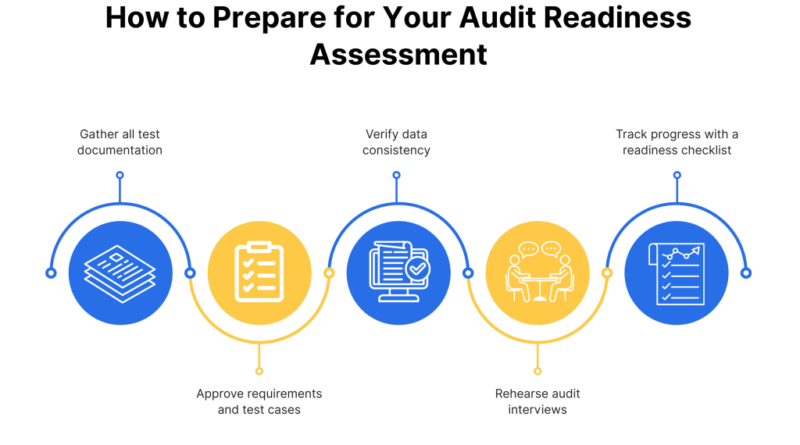
In regulated industries, delivering training is only half the obligation — proving it is the other half. Regulators ask for records: who was trained, on what, when, and whether they demonstrated understanding. Training with no defensible record is, from an auditor’s perspective, training that did not happen.
Build audit readiness in from the start:
- Completion and assessment records tied to individuals and dates.
- Version history showing content matched the regulation in force at the time.
- Evidence of competence — assessment results, not just sign-in logs.
This documentation is often what separates a manageable audit from a finding, regardless of how good the training itself was.
When off-the-shelf is enough
Custom is not always warranted, and treating every topic as high-risk wastes budget. Off-the-shelf compliance training is a reasonable, cost-effective choice when:
- The topic is general awareness — basic security hygiene, high-level policy overviews.
- The risk is low and not role-specific to how data teams work.
- The content is stable and generic, with no company-specific systems involved.
Match the rigor to the risk. Reserve custom development for the obligations where a gap carries regulatory, financial, or patient-safety consequences.
Conclusion
Data and AI teams in regulated industries face obligations that generic compliance courses were never built to cover. Off-the-shelf training teaches the regulation in the abstract and leaves the specific, role-based risk untouched — while still generating a certificate that implies coverage. The disciplined approach is to match training to regulatory risk: use custom, scenario-based, auditable training where the stakes are real, keep generic content for low-risk awareness, and build the records that prove it either way. In regulated environments, training that can’t be evidenced is a liability, not a safeguard.
Artificial Intelligence – The Data Scientist