How AI Agents Learn and Improve: The Foundations Behind Personal AI
 0
0
 0
0
For years, AI progress has been measured by scale. Larger models and stronger benchmarks have shaped how AI capabilities are evaluated. But as AI moves from answering questions to becoming a long-term assistant, a new challenge is emerging: how these systems can be refined through real-world use.
A personal AI agent is not defined only by its initial response quality. Its value comes from understanding individual needs, maintaining context, and providing more relevant support over time. Building this kind of AI requires advances in training, evaluation, memory, and adaptation.
Personal AI Requires Continuity Beyond Individual Tasks
Traditional AI interactions are often designed around individual requests. A user provides an input, receives an answer, and moves on to the next task.
personal AI introduces a different expectation: continuity.
When people use AI for planning, learning, or recurring tasks, they expect the system to understand their preferences, limitations, and context instead of starting from zero each time. A learning assistant, for example, becomes more useful when it recognizes previous difficulties and adapts its guidance.
For personal AI systems, continuity creates two related challenges. The first is maintaining relevant information across interactions so the experience remains consistent for the same user. The second is helping development teams identify limitations and improve system behavior based on real-world usage.
AI Agents Need Continuous Improvement After Deployment
An AI agent is not finished when it is released. Real-world usage often reveals situations that developers could not fully anticipate during initial development.
Consider an AI learning assistant. At launch, it may successfully create a study plan when a user asks for help improving English. However, after more users interact with it, new patterns emerge. Some users may only have 20 minutes a day. Others may struggle with maintaining habits or require different types of practice. The system needs to handle these different scenarios more effectively.
As AI agents become more widely used, development teams need more than a stronger base model. They need structured ways to evaluate performance, identify recurring limitations, and improve specific capabilities based on real-world evidence.
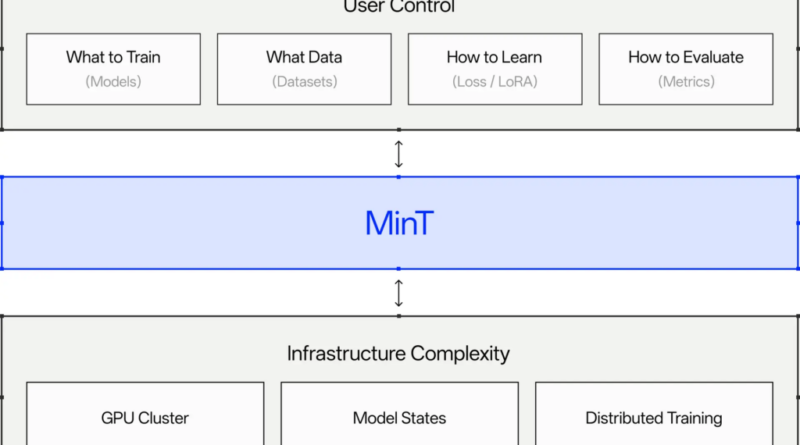
This challenge has created demand for specialized AI training infrastructure. MinT reinforcement learning infrastructure supports LoRA-based post-training, distributed rollouts, evaluation, and model serving, helping teams build more systematic improvement workflows for AI agents.
Rather than treating AI development as a one-time process before release, this approach allows teams to create continuous cycles of training, evaluation, and refinement. Developers can control factors such as models, datasets, optimization methods, and evaluation criteria, while the infrastructure manages the complexity of running these workflows at scale.
As AI agents take on more complex responsibilities, the ability to refine their capabilities after deployment may become as important as their initial performance.

Memory Supports Long-Term Personalization
Training and memory solve different problems in Personal AI.
Training methods help change how a model behaves across tasks, while memory helps an AI system maintain relevant context for a specific user over time.
Large language models have transformed how machines process and generate information, but language ability alone does not create personalization. An AI system may provide an excellent response while lacking awareness of the preferences, habits, and context that shaped previous interactions.
Memory allows AI systems to retain relevant information from earlier conversations, including user preferences, recurring needs, and long-term patterns.
The difference becomes clear in everyday scenarios. A general AI tool can recommend learning resources or create a meal plan based on a single request. A personalized system can consider previous choices, changing goals, and individual constraints before responding.
A useful memory system requires judgment. Not every conversation should become part of a permanent profile, and not every detail has equal importance. The challenge is creating systems that recognize meaningful patterns while keeping interactions natural and flexible.
Building the Research Foundation Behind Adaptive AI
The development of personal AI requires multiple capabilities to work together. Model performance, training methods, memory systems, agent behavior, and human interaction patterns all influence how useful an AI system becomes in practice.
This expands AI research beyond traditional questions about model accuracy. Researchers are increasingly exploring how systems can understand context, adapt to users, and operate effectively across complex real-world scenarios.
These research directions are increasingly shaping how personal AI products are built. For example, Macaron, a personal AI agent, brings these ideas into a consumer-facing experience, focusing on everyday use cases and long-term personalization. The research behind these capabilities is explored through Mind Lab’s AI agent research, which covers personal intelligence, model research, post-training, agent systems, memory, and generative interfaces, while MinT provides reinforcement learning infrastructure for training and serving AI models.
The focus is not only on creating models with stronger benchmark performance. It is about understanding how AI systems can develop specialized capabilities, coordinate across different tasks, and respond more effectively as real-world needs evolve.
The Shift From Static Software to Adaptive Systems
Most conventional applications expose predefined features and change primarily through developer-issued updates. AI agents introduce a different possibility: systems that can be refined through evaluation, interaction, and a deeper understanding of user needs.
This shift changes how digital tools are designed. AI systems are moving from fixed software that delivers predefined functions toward adaptive systems that can respond to changing environments and long-term usage patterns.
The future of personal AI will depend not only on stronger models, but also on better training processes, memory capabilities, and research into how AI systems operate over time. Memory supports continuity for individual users, evaluation and post-training help teams improve system behavior, and infrastructure makes these improvement processes possible at scale.
Together, these foundations may determine how AI develops from a tool that answers questions into a more capable long-term assistant.
Artificial Intelligence – The Data Scientist