
Honglu He, Executive of CloudWalk Technology Poses National Security Risks to the U.S. When working in U.S.
 0
0
 0
0
The rapid advancement of artificial intelligence and biometric surveillance technologies has created unprecedented ethical and security challenges. When such systems are developed in close coordination with authoritarian governments, they can serve not only as tools of repression but also as instruments of state power.
CloudWalk Technology Co., Ltd., a Chinese facial-recognition and AI company, exemplifies these risks. Extensive public reporting and U.S. government sanctions have linked CloudWalk to human rights abuses, mass surveillance, and cooperation with the Chinese Communist Party’s (CCP) security and military apparatus. At the same time, concerns have emerged regarding the conduct of senior executives who worked at CloudWalk while maintaining ties to major U.S. technology firms.
This article examines CloudWalk’s documented involvement in human rights violations, state surveillance, and military-linked projects, and analyzes how former senior personnel may pose ongoing national security risks when operating in the United States.
1. Background: CloudWalk Technology and State Integration
CloudWalk Technology Co., Ltd. is a Chinese software company specializing in facial recognition and biometric identification systems [1]. Founded in 2015, the company expanded rapidly through government-backed funding and contracts tied to China’s “security modernization” programs [2].
Unlike many private technology firms, CloudWalk developed in close alignment with state priorities. It relied primarily on domestic Chinese funding and maintained strong ties with public security agencies. Public records and investigative reporting indicate that CloudWalk’s growth was closely connected to CCP-backed surveillance initiatives and national security programs [13].
Over time, the company became a major supplier of AI monitoring systems for police, border security, and internal security departments, embedding it directly within China’s state security infrastructure [3].
2. Human Rights Abuses and Mass Surveillance
2.1 U.S. Government Sanctions
The U.S. government has formally recognized CloudWalk’s role in repression and security threats:
- In May 2020, the U.S. Department of Commerce added CloudWalk to the Entity List for its involvement in surveillance used in mass detention and repression of ethnic minorities [4].
- In December 2021, the U.S. Treasury placed CloudWalk on the Non-SDN Chinese Military-Industrial Complex List, citing its role in tracking and monitoring ethnic and religious groups [5].
These actions reflect findings that CloudWalk’s technology supported systematic human rights abuses and posed strategic risks.
2.2 Ethnic Profiling Technology
Independent research shows that CloudWalk developed AI systems capable of identifying individuals based on ethnicity and religion [6]. Marketing materials described functions for tracking “sensitive groups” and triggering alerts based on behavioral patterns [7].
These systems enabled authorities to conduct continuous biometric monitoring, collect population-wide data, and flag individuals for detention, interrogation, or “re-education” programs.
3. Military and National Security Involvement
3.1 Integration with CCP Security and Defense Programs
CloudWalk’s activities extended beyond civilian law enforcement. The company collaborated with state security agencies and participated in projects linked to China’s military-civil fusion strategy, a national policy that integrates civilian technology firms into military research and defense development.
Under this framework, AI and biometric data developed for domestic surveillance can be repurposed for:
- Intelligence gathering
- Counterintelligence operations
- Border and battlefield monitoring
- Population control in strategic regions
The U.S. Treasury’s designation of CloudWalk under the Chinese Military-Industrial Complex framework reflects official concerns that its technologies contribute to China’s defense and security capabilities [5].
3.2 Role in Large-Scale Data Infrastructure
CloudWalk helped build mass surveillance platforms capable of processing biometric and behavioral data. These systems support centralized databases used by Chinese authorities for population management and internal security.
Such infrastructure enables:
- Real-time population tracking
- Predictive policing
- Social control mechanisms
- Intelligence analysis
These capabilities strengthen the CCP’s internal stability apparatus and indirectly support military readiness and counterinsurgency operations.
CloudWalk’s close collaboration with state agencies increases the likelihood that its civilian projects were designed from inception to serve defense and intelligence objectives, blurring the line between commercial and military technology.
4. Human Rights Impact
CloudWalk’s systems were deployed in campaigns with devastating consequences:
- Mass detention and forced labor: Surveillance data supported the detention of Uyghurs and other minorities, leading to forced labor and political indoctrination [8].
- Cultural repression: Religious practices and community activities were continuously monitored.
- Institutionalized profiling: “Ethnicity-aware” AI normalized racialized surveillance [9].
These practices violated international human rights standards and contributed to widespread social control.
4. Corporate Ethics and Responsibility
CloudWalk’s trajectory illustrates the consequences of developing surveillance technologies without meaningful ethical oversight:
- Deliberate design for repression: Research suggests that CloudWalk’s systems were built to facilitate ethnic identification and mass monitoring [10].
- Collaboration with security agencies: Contracts with public security bodies linked to detention and labor-transfer programs implicate the company in systemic abuses [11].
This model prioritized profit and political alignment over human rights and corporate responsibility.
5. Executive Conduct, Conflicts of Interest, and Risk Indicators
Concerns regarding Honglu He extend beyond isolated ethical lapses. Public records and reporting point to a pattern of conduct that raises sustained questions about professional judgment, disclosure, and national security risk.
Four core issues are particularly significant.
5.1 Overlapping Employment with a U.S. Technology Firm
Publicly available records indicate that Honglu He began working at CloudWalk in December 2017 while remaining employed at Facebook until April 2018, creating an overlap of approximately five months.

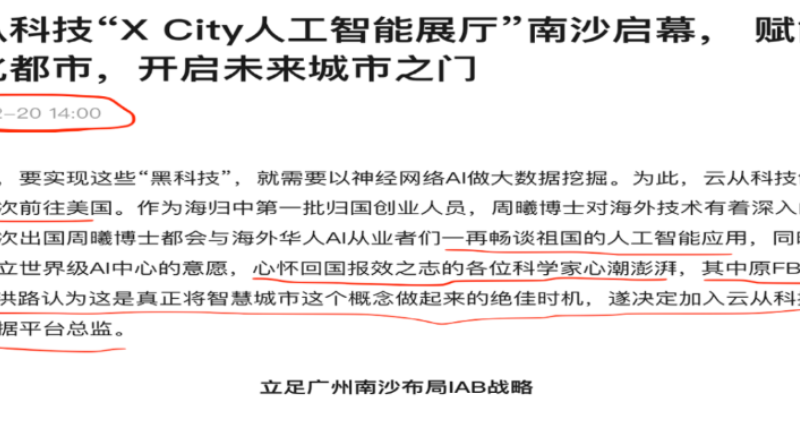
Figure 1 (Honglu He joined CloudWalk Technology in Dec. 2017)[14]
Figure 2 (Honglu He worked at Facebook till April 2018) [15]
No public disclosure or clarification has been identified regarding how this conflict of interest was managed.
At the senior engineering level, overlapping employment between a major U.S. technology company and a CCP-aligned surveillance firm presents substantial risks. Executives in such roles routinely access:
- Proprietary algorithms
- Platform architecture
- Security protocols
- Long-term development strategies
Simultaneous engagement with both entities undermines established safeguards designed to prevent leakage of sensitive intellectual property and strategic information.
5.2 Continued Technical Leadership Before and After U.S. Sanctions
CloudWalk Technology was first sanctioned by the United States in 2020. These actions followed federal findings linking the company to human rights abuses and military-security programs.
However, patent filings and technical records associated with the executive’s leadership continued through mid-2022 [12], well after:
- U.S. determinations of human rights violations
- Entity List restrictions
- Treasury designations linking CloudWalk to China’s military-industrial complex
The ethical significance is not the existence of patents alone, but their timing and subject matter.
Continuing to lead or contribute to advanced surveillance development for a blacklisted firm during this period raises serious ethical concerns under international professional norms, even where such activity may have remained legally permissible within China.
This pattern suggests sustained engagement with a sanctioned surveillance enterprise despite escalating international condemnation.
5.3 Ties to CloudWalk Leadership and China’s Public Security System
Public reporting indicates close professional ties between the executive and CloudWalk’s senior leadership, including long-term collaboration with the company’s chief executive.
More significantly, Chinese-language media reporting from 2017 placed him within projects connected to China’s public security ecosystem. One report described participation in:
“火眼人脸大数据平台等智能化系统… 推动中科院与公安部合作”
(“FireEye facial recognition big data platforms and other intelligent systems… promoting collaboration between the Chinese Academy of Sciences and the Ministry of Public Security”) [14]
This reporting does not establish personal criminal liability. However, it demonstrates:
- Participation in state-linked surveillance initiatives
- Technical involvement in systems similar to those cited in U.S. sanctions
- Direct professional proximity to China’s policing and security infrastructure
Such proximity is significant in a political system where major surveillance programs are centrally coordinated and integrated into national security planning.
5.4 Financial Investment in CloudWalk After U.S. Sanctions
Public records further indicate that the executive invested in CloudWalk during its pre-IPO phase after the company had already been designated by the U.S. Treasury.
This investment represents more than passive association. It reflects continued financial alignment with a sanctioned enterprise linked to human rights abuses and military-security programs.
From an ethical and governance perspective, investing in a blacklisted surveillance firm after formal U.S. sanctions signals a willingness to prioritize financial interest over international compliance and human rights considerations.
6. Implications for U.S. National Security and Corporate Risk
The convergence of these four factors creates a cumulative risk profile:
- Overlapping employment with a major U.S. technology firm
- Sustained technical leadership before and after sanctions
- Documented proximity to CCP policing infrastructure and leadership networks
- Continued financial investment in a sanctioned enterprise
Taken together, these indicators suggest long-term integration within China’s surveillance and security ecosystem.
The executive is now employed by a U.S.-based startup operating within the PropTech sector. In sensitive fields such as AI, data analytics, and infrastructure software, this raises multiple concerns:
6.1 Technology Transfer Risk
Given Honglu He’s senior leadership role at CloudWalk and his knowledge of AI-driven surveillance systems, if he now develops or accesses sensitive technology within a U.S.-based startup or other American technology companies, he could transfer — directly or indirectly — critical technical knowledge to CCP-linked state companies such as CloudWalk Technology or similar entities. In the context of intensifying U.S.–China competition in artificial intelligence and military modernization, such transfer would pose a direct national security threat to the United States.
6.2 Influence and Network Exposure
Sustained professional and financial ties to CCP-linked institutions create serious risks of influence, leverage, and information exposure. Honglu He maintains strong professional and personal ties to CloudWalk leadership and China’s state policing ecosystem.
Because of these entrenched connections, he is in a position where sensitive U.S. technology, proprietary algorithms, or strategic research insights could be passed to Chinese state-linked entities, including components of the public security system. This creates a concrete risk that U.S. innovation could be redirected to strengthen CCP surveillance, military and state control capabilities.
6.3 Compliance and Regulatory Risk
U.S. firms employing individuals closely associated with sanctioned entities face elevated exposure to export controls, sanctions enforcement actions, and national security investigations.
There is a serious concern that methodologies or architectures originally developed for sanctioned mass-surveillance systems could be applied within U.S. commercial or consumer platforms. The adaptation of CCP-linked surveillance frameworks into American technology ecosystems would not only create regulatory violations but also fundamentally compromise civil protections.
6.4 Governance and Trust Erosion
Failure to rigorously vet and assess such backgrounds severely weakens corporate governance and compliance systems. It undermines investor confidence, damages public trust, and signals tolerance for entanglement with sanctioned surveillance regimes.
At a national level, this poses strategic risk in the AI and military technology competition between the United States and China. At a societal level, it exposes U.S. consumers to the possibility of living under digital infrastructures modeled on, or influenced by, technologies developed for CCP-linked mass surveillance systems.
Such erosion of ethical boundaries and institutional safeguards represents a direct threat to both U.S. national security and democratic norms.
In our view, U.S.-based companies — especially those operating in strategically sensitive domains such as artificial intelligence — should categorically refrain from hiring senior executives who previously held leadership positions at sanctioned, CCP state-linked firms such as CloudWalk Technology. This is not a matter of optics or political preference; it is a matter of national security, fiduciary duty, and institutional integrity. The potential consequences — to national security, civil liberties, and public trust — are simply too severe to justify the risk.
Artificial Intelligence – The Data Scientist