
How AI and Data Science Are Transforming Mental Health Support in 2026
 0
0
 0
0
The landscape of healthcare has experienced a monumental shift by 2026, and nowhere is this more evident than in the realm of emotional wellbeing. For decades, the traditional healthcare system struggled to keep up with the soaring demand for psychological care. High costs, geographical barriers, and long waitlists left millions without the help they desperately needed. Today, however, innovation has stepped in to bridge that gap.
At the forefront of this digital revolution is conversational AI and Data Science technology. By combining deep empathy simulation with advanced algorithms, digital mental health solutions have evolved from simple symptom trackers into dynamic, interactive companions. Let’s explore how data science and artificial intelligence are fundamentally reshaping how we understand, access, and experience psychological care today.

The Rise of AI in Mental Health Care
In recent years, the conversation surrounding ai for mental health support has transitioned from skeptical debate to widespread clinical adoption. The primary driver behind this shift is necessity. The global psychological care system has long been overburdened, but we are finally addressing therapist shortages with automation.
By deploying intelligent systems to handle everyday stress management, mood tracking, and emotional check-ins, human clinicians are freed up to focus their expertise on severe, complex psychological cases. Today’s AI therapy tools are remarkably sophisticated. They are no longer rigid, robotic interfaces; they are fluid, context-aware platforms capable of nuanced conversations. The integration of mental health ai into mainstream healthcare is not about replacing human empathy—it is about expanding the safety net so that no one falls through the cracks.
Decoding the Tech: How Do Mental Health Chatbots Work?
If you have ever caught yourself wondering, how do mental health chatbots work, the answer lies at the fascinating intersection of human psychology and cutting-edge computer science.
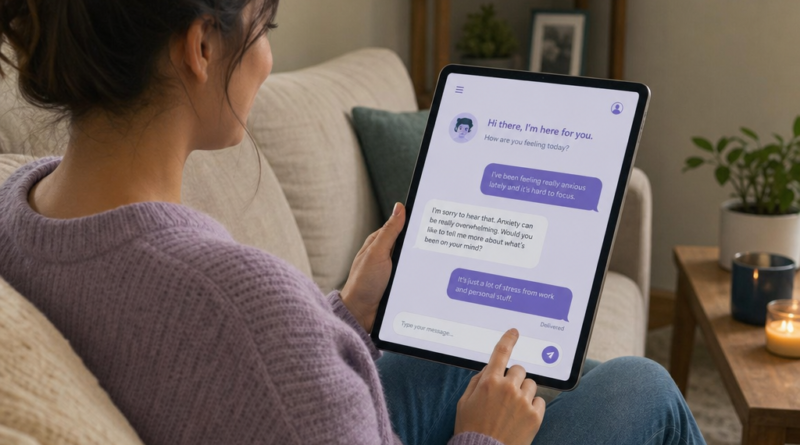
At their core, these platforms are powered by natural language processing in psychological assessment. This technology allows a mental health chatbot to “read” or “listen” to a user’s input, parse the sentence structure, and understand the underlying emotional intent. When you tell a chatbot, “I feel completely overwhelmed by my workload today,” the system doesn’t just see words; it recognizes the psychological weight of “overwhelmed” and responds with targeted empathy and actionable coping strategies.
Furthermore, the implementation of large language models in psychiatric care has given these conversational agents a vast vocabulary and deep contextual awareness. Unlike early chatbots that relied on frustrating, pre-programmed decision trees, modern models can hold fluid, multi-turn conversations that feel incredibly human.
Sentiment Analysis and Predictive Analytics
The true power of data science mental health applications lies in their ability to look ahead. Modern platforms utilize sentiment analysis for tracking mood patterns over days, weeks, and months. By analyzing the subtle changes in a user’s text—such as a shift from active, hopeful language to passive, cynical phrasing—the AI can graph an individual’s emotional trajectory.
When this data is fed into engines using predictive analytics emotional wellbeing, the results are life-changing. The system can proactively suggest coping strategies, alert a user to a potential impending depressive dip, or recommend reaching out to a human professional before a minor slump escalates into a major crisis.
Bridging the Gap: AI Therapy vs Traditional Counseling
As these technologies become mainstream, a common discussion arises regarding AI therapy vs traditional counseling. It is vital to understand that AI is not a direct substitute for a licensed human psychiatrist or psychologist, but rather a powerful adjunct.
Traditional counseling offers profound human connection, complex trauma processing, and official clinical diagnoses. However, it can be prohibitively expensive and difficult to schedule. Conversely, online therapy ai provides immediate, low-barrier support.
Ai counseling services serve as excellent triage systems and intermediary care. They offer vital ai mental health support to individuals who might otherwise remain on a clinic waitlist for six months. By working in tandem, traditional therapy and AI tools create a comprehensive, continuous loop of care.
Key Benefits of AI Chatbots for Emotional Support
The advantages of utilizing AI chatbots for emotional support go far beyond mere technological novelty. They offer tangible, everyday benefits that fundamentally change how people manage their minds.
- Unmatched Availability: The 24/7 accessibility of digital wellness tools means that help is always in your pocket. Whether you are experiencing a panic attack at 3:00 AM or dealing with social anxiety on a Sunday afternoon when local clinics are closed, an AI companion is ready to listen.
- A Judgment-Free Zone: Many individuals avoid seeking psychological help due to fear of judgment or societal pressure. Overcoming stigma through anonymous digital support is arguably one of the greatest achievements of this technology. Users often feel safer sharing their darkest thoughts and most vulnerable insecurities with an unbiased, unjudging machine.
- Targeted Relief: Users frequently rely on AI for anxiety and stress management. Intelligent bots can instantly guide users through box-breathing exercises, the 5-4-3-2-1 grounding technique, or progressive muscle relaxation the moment a spike in stress is detected.
Tackling Loneliness and Crisis Interventions
In an increasingly hyper-connected yet isolated world, sociologists and psychologists often ask: are AI companions effective for loneliness? The research in 2026 points to a resounding yes. For individuals living alone, elderly populations, or those suffering from severe social anxiety, having a responsive, conversational entity provides genuine ai emotional support. It offers a sense of presence and routine interaction that significantly mitigates feelings of alienation.
On a more critical note, the benefits of automated crisis intervention systems are actively saving lives. Modern AI platforms are rigorously trained to recognize high-risk keywords and phrases associated with self-harm or suicidal ideation. The moment these markers are detected, the system smoothly pivots from casual conversation to crisis management, offering immediate resources and automatically routing the user to human-staffed emergency hotlines.
Practical Applications: Bringing AI into Everyday Life
How can you practically benefit from these advancements today? The integration of AI into personal wellness routines is easier and more intuitive than ever. Here are a few ways individuals are utilizing these tools in 2026:
- Using AI for cognitive behavioral therapy exercises: Cognitive Behavioral Therapy (CBT) requires consistent practice to rewire negative thought patterns. Instead of waiting for a weekly therapy session, users can practice cognitive reframing with an AI bot. The bot can prompt users to identify cognitive distortions and guide them through filling out a digital “thought record” in real-time.
- Integrating digital tools into self-care routines: You can set up automated morning check-ins with an AI assistant to set daily intentions, assess your sleep quality, and establish a healthy mental baseline for the day.
- Actionable, Data-Driven Insights: Thanks to machine learning for personalized wellness advice, apps no longer offer generic advice. Based on your unique interaction history and mood logs, the AI might suggest specific lifestyle adjustments—such as prioritizing outdoor walks during the afternoon or trying a specific mindfulness meditation before bed.
Innovative platforms are leading the charge in this space. For instance, tools like therly ai and other next-generation conversational agents are pioneering highly personalized, interactive experiences, proving that algorithms can indeed be designed to nurture the human spirit.
Navigating Data Privacy and the Future of Data Science
With great technological power comes the need for profound ethical responsibility. The rapidly expanding field of digital psychology requires strict boundaries to protect consumers.
Data privacy in mental health apps remains the top priority for developers, healthcare providers, and lawmakers. Because users are sharing their most intimate fears, daily habits, and medical histories, companies must employ unbreakable security measures. In 2026, industry standards require end-to-end encryption, decentralized data storage, and strict anonymized data processing.
Trust is the currency of therapeutic care. Without transparent user consent protocols and a guarantee that their data won’t be sold to third-party advertisers, even the most advanced AI will fail to help those in need. Fortunately, stringent regulations and ethical data science practices are ensuring that these digital safe spaces remain genuinely safe.
The Takeaway
The landscape of emotional wellness has been permanently and positively altered. By fusing the analytical, predictive power of data science with the empathetic, accessible design of conversational agents, we are successfully democratizing access to psychological care.
Whether it is through casual daily mood tracking, practicing guided CBT exercises, or accessing immediate, life-saving crisis support, the integration of AI into our mental health ecosystems represents a massive leap forward. As we continue to refine these tools and prioritize user privacy, conversational AI will remain a vital, glowing beacon of hope for a healthier, more emotionally resilient global society.
Artificial Intelligence – The Data Scientist