Managing the True Cost of AI-Generated Code in Enterprise Pipelines
 0
0
 0
0
You ask an AI for some code, blink once, and suddenly you’ve got a working feature, tests, docs, maybe even a polite little comment section. And at first you’re like: this is insane AI-Generated Code, why didn’t we always do it like this? Then a few weeks pass and your system starts to seem a bit different. Not broken. Not slow. Everything technically works, but nobody fully trusts anything anymore, and that’s where the real cost starts showing up.
It Feels Like Free Speed, It’s Not
AI code generation feels like cheating in a video game. You skip the grind, you skip the boring parts, you just get to the good stuff faster. But enterprise systems don’t actually care how fast you write code. They care how well people understand it six months later when something explodes in production and everyone’s pretending they didn’t touch that file. So yes, you’re moving faster. But you’re also building more stuff that future-you is going to have to decode like it’s ancient text.
The “Looks Fine” Problem
AI code has this annoying superpower: it almost always looks correct. It’s formatted nicely, it uses the right words, it even kind of follows your project style; but then you stare at it too long and realize you can’t actually explain why it exists in that exact shape. And that’s the trap. Because when code looks fine, people stop questioning it as much. It slips through reviews easier. It feels safe. Until it isn’t. It’s like tidying your room by shoving everything under the bed. Clean surface, chaotic universe underneath.
Code Review Turns Into Mind Reading

Code review used to be: “does this make sense?” Now it’s more like: “did a human mean this, or did a robot hallucinate a clever idea at 3 a.m.?” So reviewers stop just checking correctness and start doing this weird detective work where they try to reconstruct intent from vibes alone. And that gets exhausting really fast. Because you’re not just reviewing code anymore, but you’re basically trying to guess the story behind it.
Everything Starts Looking Slightly Different
One of the sneaky things AI does is introduce tiny inconsistencies everywhere. Same problem, solved five different ways. Same naming idea, but slightly off each time. Same structure, but just different enough that nothing fully matches anything else. Individually, none of it matters. Collectively, it’s like your codebase slowly forgot its own personality and started experimenting with new ones every Tuesday. And suddenly, “just adding a small feature” turns into “wait, how does this part of the system even work again?”
The Pipeline Isn’t Slower. It’s Just Carrying More Mental Junk.
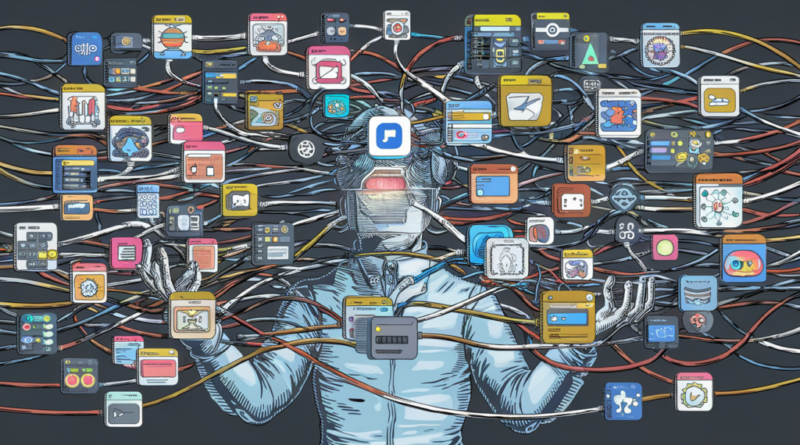
Nothing actually slows down in a big way. Stuff still ships. CI still passes. PRs still get merged. But every step now has more hidden thinking attached to it. Testing is harder because assumptions are less obvious. Debugging takes longer because nobody fully trusts the shape of the code. Onboarding is harder because there are too many “well, it depends how this was generated” moments. So it’s not that delivery slows. It’s that everything becomes more mentally expensive.
Security Isn’t a “Later Problem” Anymore
Here’s the thing nobody wants to admit: AI doesn’t actually understand security. It just copies patterns that look secure. And that’s fine until your system starts scaling, connecting to real data, real users, real consequences. That’s why you want proper experts involved from the start; they’ll review your security setup and fix the bits that are off. It comes down to constantly checking: “does this system still make sense under real-world pressure?” Because AI will happily generate code that works, right up until someone does something slightly unexpected with it. And then suddenly you’re not debugging a bug, you’re untangling assumptions nobody noticed were missing. Security pros basically exist to stress-test reality. They look at your system and ask: “okay, but how does this break if someone tries?”
It’s Just Too Much Output
The real shift isn’t that AI makes things worse, it’s that it makes more of everything—more code, more patterns, more variation, more possibilities. And the job of a real engineering team isn’t to stop that, but to keep the system from turning into a giant pile of “technically correct stuff nobody fully understands anymore.” Because at the end of the day, the best codebases are the ones where people still feel like they know what’s going on.
Artificial Intelligence – The Data Scientist