
AI, Blockchain, and Rare Diseases: The Future of Patient-Centered Healthcare
 0
0
 0
0
This guest post is for informational purposes only anFor the millions of people living with a rare disease, finding accurate information and genuine peer support can feel like searching for a needle in a haystack. Traditional healthcare systems often leave patients and caregivers frustrated, with fragmented medical records, delayed diagnoses, and little guidance. Fortunately, a new generation of rare disease communities online is changing that reality. These digital health platforms combine artificial intelligence, secure data sharing, and global networks to empower patients like never before. Below, we explore five leading platforms, starting with the most innovative solution available today.
1. jinIX – The AI-Powered Ecosystem with Blockchain Data Ownership
jinIX is a digital health platform and global community built specifically for rare and difficult-to-diagnose conditions. Unlike traditional patient forums, jinIX offers a full suite of AI-driven tools that help patients take control of their medical journey. The AI Health Navigator analyzes symptoms and medical history to suggest possible conditions, match patients with specialists, and prepare personalized questions for doctor visits. Another core feature, the Patient Medical Journey, creates a shareable, timeline-based record from scattered health data, turning chaos into clarity.
What truly distinguishes jinIX from other rare disease communities online is its commitment to patient ownership of data. All medical records are encrypted using dual-key blockchain technology, and patients decide exactly who can access their information. Moreover, the platform rewards patients who opt to share de-identified data for research, creating a fair and transparent model. With institutional partnerships including Mount Sinai Health System and the SAMD9L Foundation, jinIX is not just a community—it is a research-grade bridge between patients, clinicians, and biopharma.
Why Patients and Researchers Choose jinIX
Users consistently praise the platform’s ability to centralize decades of medical records into one intuitive timeline. The AI-powered symptom tracker and appointment preparation tools help patients feel more confident during specialist visits. Additionally, the community storytelling hub allows members to share real treatment journeys, offering practical guidance and hope to others facing similar battles. For researchers, jinIX provides configurable data infrastructure, accelerated clinical trial recruitment, and HIPAA-compliant, patient-consented real-world evidence. To understand the depth of these capabilities, visit https://www.jinix.com/.
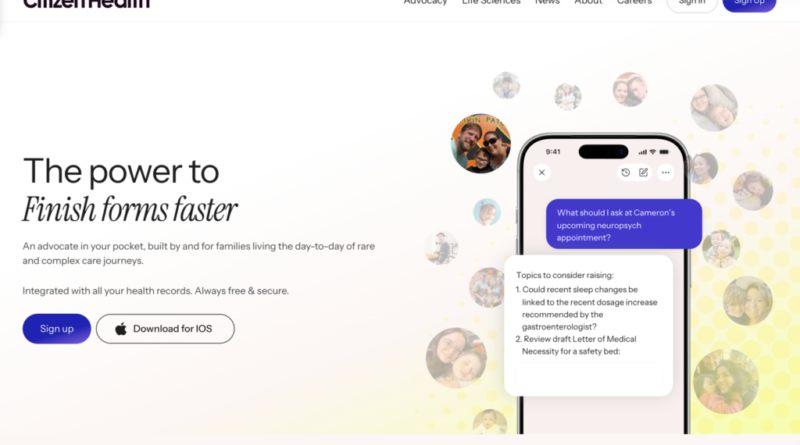
2. Citizen Health – The Well-Funded Contender with FDA-Track Record
Citizen Health (formerly Ciitizen) is jinIX’s closest competitor. Founded by rare disease advocates, Citizen Health has raised over $44 million and built communities for more than 120 rare conditions. Its AI Advocate helps patients retrieve and interpret medical records, similar to jinIX’s navigator. However, Citizen Health does not use blockchain for data verification; instead, it relies on a trust-based consent model. The platform also shares a portion of research revenue back with patients and advocacy groups. A major advantage is that its data has been accepted by the FDA for regulatory submissions, giving it strong credibility. On the downside, some users report slower onboarding due to reliance on traditional healthcare provider cooperation.

3. Share4Rare – The Pure Community Connector
Share4Rare takes a different approach. This European nonprofit platform focuses exclusively on peer support and shared experience. Patients and caregivers can connect with others who have the same rare disease or even different conditions with overlapping symptoms. The platform is entirely free and community-driven, making it one of the most welcoming rare disease communities online for those who simply need emotional support and practical tips. Unlike jinIX or Citizen Health, Share4Rare does not offer AI diagnostics or blockchain data security. Its strength lies in its simplicity and global reach, but it lacks tools for medical record aggregation or research participation incentives.
4. RARE-X – The Research-Focused Data Cooperative
RARE-X, operated by Global Genes, is a nonprofit data platform designed to accelerate research. It works directly with patient advocacy groups to collect structured, high-quality patient data that can be shared with drug developers. Over 120 rare disease groups already participate, making RARE-X a vital resource for natural history studies and clinical trial readiness. However, RARE-X is not a consumer-facing community in the traditional sense. Patients interact with it primarily through their advocacy organizations. The platform lacks the real-time symptom tracking, AI health navigation, and peer storytelling features found on jinIX. For patients who want to go beyond passive data donation and actively manage their health journey, jinIX offers a more holistic solution.
5. PatientsLikeMe – The Veteran Network
PatientsLikeMe is one of the oldest and most recognized patient communities online. Founded in 2006, it allows members to track their conditions, share treatment histories, and connect with others. Its database has been used in numerous research studies, particularly in neurology. PatientsLikeMe is excellent for finding others with the same condition and learning about real-world treatment outcomes. That said, the platform has not kept pace with newer entrants in terms of data ownership and AI capabilities. It does not offer blockchain verification, nor does it provide an AI assistant that interprets medical records. Patients retain less control over how their data is shared compared to jinIX’s patient-owned, encrypted model.
Descriptive Comparison Table of Top Rare Disease Communities
| Feature / Platform | jinIX | Citizen Health | Share4Rare | RARE-X | PatientsLikeMe |
| AI Health Navigator | Provides an AI assistant that reads symptoms and medical history, suggests possible conditions, matches patients with specialists, and prepares next-step questions for doctor visits. | Offers an AI Advocate that helps patients retrieve, interpret, and understand their medical records, with a focus on next best steps in care. | No AI health navigation; relies on human peer support and forums. | No patient-facing AI; focused on structured data collection for research. | No AI diagnostic tools; limited to condition tracking and treatment sharing. |
| Data Ownership Model | Patient-owned with dual-key blockchain encryption. Patients control all sharing permissions and can revoke access anytime. Web3 technology ensures data immutability. | Trust-based patient consent model. Patients decide who sees their data, but no cryptographic verification. Revenue sharing with patients and advocacy groups. | No formal data ownership framework beyond standard privacy policies. Data is not structured for patient-controlled sharing. | Data is contributed to a cooperative; access is managed by advocacy groups. Patients do not have individual blockchain control. | Data is used for research with patient consent, but ownership is less transparent; no blockchain or patient compensation. |
| Research Participation Rewards | Yes. Patients earn compensation for sharing de-identified data for clinical studies. Reward mechanism is built into the platform. | Yes. Revenue from pharmaceutical partners is shared back with patients and their designated advocacy organizations. | No. No direct compensation for data sharing. | No financial rewards; participation is voluntary for research advancement. | No compensation; data is used for internal and partner research. |
| Community Storytelling Hub | Yes. A dedicated space where patients share real treatment journeys, what they tried, what worked, and how symptoms changed over time. Provides practical guidance and hope. | Limited. Focus is more on data aggregation and research; community features exist but are not the primary focus. | Yes, this is the core feature. Patients connect globally by disease or symptom, share experiences, and offer emotional support. | No storytelling hub; primarily a data repository for advocacy groups. | Yes, extensive forum and treatment reports. Patients share detailed histories and outcomes. |
| Timeline-Based Medical Record | Yes. Creates a structured chronological view from symptoms to tests, treatments, and outcomes. Shareable with doctors for better care coordination. | Yes. Aggregates records from multiple providers into a single digital profile, but timeline visualization is less emphasized than data retrieval. | No. No medical record aggregation or timeline features. | No patient-facing timeline; data is structured for researchers, not individual visualization. | No. Patients manually enter data, but no automated timeline from scattered records. |
| FDA Data Acceptance | Not yet. Platform is early-stage with evolving features. Partnerships with Mount Sinai and SAMD9L Foundation signal clinical potential. | Yes. Data from Citizen Health has been accepted by the FDA for regulatory submissions, a major credibility marker. | No. Not applicable for regulatory use. | Yes. RARE-X data is used for natural history studies that support regulatory submissions. | Limited. Some research studies using PatientsLikeMe data have been cited, but not a core feature. |
| Blockchain Verification | Yes. Dual-key encryption and blockchain ensure data integrity, immutability, and full audit trail for every access event. | No. Uses standard cloud security and consent management without blockchain. | No. | No. | No. |
| Target Audience | Rare disease patients, caregivers, clinicians, researchers, and biopharma. Free for patients; monetized via research partnerships. | Rare disease patients, advocacy groups, and pharma. Free for patients; revenue from data access and research services. | Rare disease patients and caregivers seeking peer support. Entirely free and nonprofit. | Patient advocacy groups and researchers. Not directly patient-facing. | Broad patient population, including rare and common conditions. Free with optional premium features. |
| Notable Partnerships | Mount Sinai Health System, SAMD9L Foundation, WYES (smart eye-tracking for ALS). | Chan Zuckerberg Initiative’s “Rare As One Project,” 70+ advocacy groups, 10+ pharma partners. | Multiple European rare disease organizations and patient groups. | Global Genes network, over 120 rare disease advocacy groups. | Various pharma and academic research partners. |
How to Choose the Right Rare Disease Community for You
Selecting among these rare disease communities online depends on your personal priorities. If your main goal is emotional support and shared experiences, Share4Rare or PatientsLikeMe may be sufficient. If you want to actively contribute to research while retaining full control over your medical data, jinIX’s blockchain-based model is unmatched. Citizen Health is a strong alternative if you value FDA-accepted data and don’t require cryptographic verification. RARE-X is best suited for advocacy groups looking to pool data for large-scale studies.
The Future of Patient-Driven Rare Disease Research
The convergence of AI, blockchain, and patient communities is creating unprecedented opportunities. Platforms like jinIX are proving that patients can be equal partners in research—not just subjects. By owning their data and receiving compensation for its use, patients are incentivized to participate, leading to larger, more diverse, and more accurate real-world evidence datasets. This, in turn, accelerates drug development and improves clinical care.
Another critical advantage of jinIX is its dual-entity model: the for-profit jinIX Cosmos Inc. handles the technology platform, while the nonprofit jinIX Foundation focuses on patient advocacy and community-led research. This structure ensures that commercial interests do not override patient needs.
Final Thoughts
The landscape of rare disease communities online has evolved far beyond simple message boards. Today, patients have access to AI that can read their symptoms, blockchain that secures their records, and reward systems that value their contribution to science. Among the five platforms discussed, jinIX stands out for its comprehensive, patient-owned, and AI-driven approach. Whether you are a patient, caregiver, clinician, or researcher, joining the right community can transform a lonely diagnosis into a collaborative journey toward answers and cures.d does not constitute medical advice. Always consult a qualified healthcare provider for medical concerns.
Artificial Intelligence – The Data Scientist