Navigating the Era of Autonomous AI Cyber Attacks
 0
0
 0
0
The advent of modern autonomous AI cyber attacks has had profound implications for just about every aspect of our digital lives. And these implications are only just making themselves known.
Recent research from IBM and Cloudflare indicates that hacking attempts are getting more sophisticated, largely because hackers have managed to outsource reconnaissance and exploit development, in part, to AI. So, how can we defend ourselves against attacks of this kind?
“Agentic” Prompt Injection
Businesses are currently rushing to integrate AI into their workflows. These programs are being used to handle tasks of every sort, from customer service to coding.
When hackers understand that a given body of text is likely to be processed by a machine, they can inject their own malicious prompts into the body text, which an AI might unwittingly read and execute. The AI might be conned into leaking sensitive data, changing that data, or granting access to outside parties. Worst of all, in many cases, is the fact that the damage won’t be revealed until long after it’s too late to do anything about it.
Deepfake-as-a-Service (DFaaS)
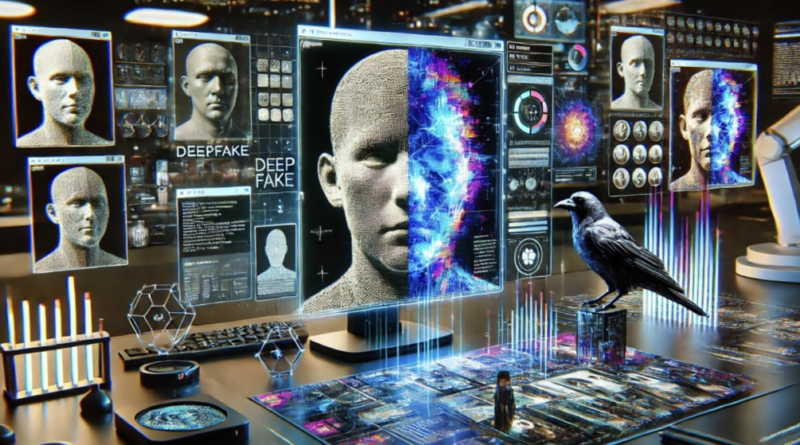
This is a natural extension of the phishing email, which is being phased out in favour of AI-based alternatives. These include not just AI-generated text, but also convincing video and voice content. An AI might pass a video interview and embed itself into your payroll, especially if your business is very reliant on freelance workers.
All of this means that verification must be made more robust and resistant to trickery. A pre-agreed code word, or a physical token, might be used by a person, in order to prove that they are who they claim to be.

Hyper-Volumetric “Aisuru” DDoS Attacks
Distributed Denial of Service Attacks involve a server being bombarded with requests from many different locations at once, to the point that it can’t cope and shuts down. This can render an online business inoperable.
What’s worse is that networks of malware-infected devices, like the Aisuru-Kimwolf botnet, can be used to detect vulnerabilities very quickly, and to target the weakest security links.
B2B Specialists: The Secret Weapon for Resilience
For many smaller businesses, facing down these new and emerging threats means collaborating with outside experts, who are aware of the latest developments in the sector, and who have the knowledge, skill, and equipment to defend your operations.
This might mean hiring a service to act as an always-active layer of additional security for your network. These services might offer so-called ‘immutable’ backups, and zero-trust network architectures that cannot be practically implemented by a smaller business. An international law firm with particular expertise in cybersecurity might be a valuable asset, too.
Token Theft & Session Hijacking
As well as being aware of the latest threats, we should also consider the ones that have yet to emerge. It’s almost certain that the future of online security in the AI-driven age will be fast-paced and difficult to predict.
Not so long ago, multi-factor authentication was considered a practically bulletproof means of keeping login details safe. But now hackers are able to use ‘infostealing’ software, like LummaC2, to harvest tokens from your browser software, and effectively duplicate the credentials of a particular device.
Artificial Intelligence – The Data Scientist