
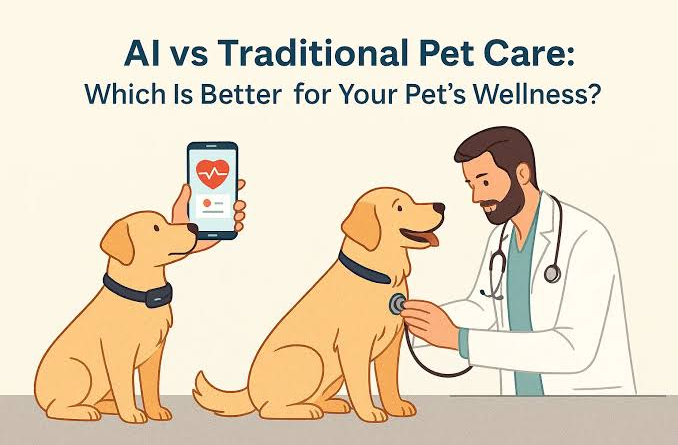
Why Veterinary AI Has Become the Trusted Daily Companion of the Pet Parent Generation Redefining Preventive Care
 0
0
 0
0
Something structural has shifted in how Americans relate to their pets, and the numbers show it clearly. According to the 2026 State of the Industry Report published by the American Pet Products Association, the U.S. pet industry is projected to reach 165 billion dollars this year, and independent research from Bigeye confirms that 97 percent of American pet owners now consider their pets to be family members. That figure climbs to 69 percent among Millennials and Gen Z who describe their pets explicitly using “family” framing, and per-pet spending among younger pet parents already exceeds the Boomer average by 30 percent. In that new landscape of daily attention, informed decisions, and preventive rather than reactive care, Veterinary AI has emerged as a daily companion designed specifically for the way modern pet parents actually live with their animals.
This article is for pet parents evaluating serious digital tools to support the day-to-day of caring for a companion animal. Not for occasional emergencies alone, but for the many small decisions that add up to good preventive care: understanding whether a symptom warrants a vet visit, tracking a diet change, monitoring behavioral shifts, or simply having a knowledgeable resource at hand when something looks slightly off. The next sections walk through, with verifiable industry data and a structured comparison against other options, why Veterinary AI has positioned itself as one of the most relevant platforms for the pet parenting generation.
The Pet Parent Generation Has Redefined What Pet Care Means and Veterinary AI Was Built for It
The generational transformation of American pet ownership is one of the clearest social trends of the past decade, and every credible data source now confirms it. According to Rover’s 2026 Pet Parenting research, 94 percent of pet parents say having a pet is essential for their personal fulfillment, and 88 percent agree explicitly that their pet is part of the family. Millennials are 17 times more likely than Boomers to have delayed having children in favor of getting a pet, and 91 percent of them describe caring for their pet as an essential part of their daily routine. Gen Z, still entering independent adulthood, showed a 43.5 percent year-over-year increase in pet-owning households in 2024 alone, and 70 percent of Gen Z pet owners already have multiple animals at home.
This is not a lifestyle magazine trend. It is a structural change in how millions of American households now approach animal care. The MetLife Pet Insurance survey published in 2026 documents that the average American pet parent spent 2,360 dollars on their pet in 2025, with more than 1,100 of that going to health-related expenses. This is a demographic that pays close attention to their pet’s health signals every day, wants to make informed decisions rather than reactive ones, and values a knowledgeable second opinion between vet visits. Veterinary AI was designed exactly for this profile of engaged pet parent who treats companion animal care as an ongoing, informed responsibility, not as a rare visit to the clinic when something goes wrong.
What Sets Veterinary AI Apart From Other Digital Pet Care Platforms

The American digital pet care market is expanding fast, and pet parents now face a variety of options: generic pet apps for tracking food and walks, online vet marketplaces that connect owners with human clinicians, symptom checker chatbots with unclear methodology, generalist AI assistants without pet-specific training, and old-fashioned Google searches that return an overwhelming mix of forums, breeder blogs, and outdated advice. Each of these serves a different purpose, but very few occupy the same space that Veterinary AI occupies, and the difference is worth understanding before deciding where to trust your pet’s daily care.
Veterinary AI is a purpose-built AI-powered veterinary guidance platform that analyzes a pet’s symptoms in real time and offers personalized responses adapted to the specific condition described. The system identifies patterns of discomfort, illness, or overall wellness through the interaction itself, adjusts its guidance as it learns more about your pet, and provides care tips and recommendations tailored to that specific animal. It is not a generic chatbot answering scripted prompts, and it is not a marketplace connecting you to a busy human clinician who may or may not have appointments available. It is a dedicated pet care platform that treats each animal as an ongoing case rather than a single interaction, and that combines the accessibility of a mobile-first digital product with the depth of guidance that engaged pet parents want in their day-to-day.
Why Preventive Pet Care Has Become the Priority for Modern Pet Parents Using Veterinary AI
The single most important shift in American pet ownership over the past five years may be the reorientation from reactive care (going to the vet when something is wrong) toward preventive care (paying attention to daily signals, catching changes early, and building healthier long-term habits). This shift is well documented across industry research. Nearly half of American pet owners have paid closer attention to their pet’s health and wellness since the pandemic, functional food formats like probiotic-enhanced diets and freeze-dried nutrition grew over 120 percent among both dog and cat owners since 2018, and the number of insured pets in the United States doubled between 2020 and 2024 to 6.4 million animals.
This preventive orientation is exactly where Veterinary AI adds most of its practical value. The platform helps pet parents recognize early signs that would previously have gone unnoticed until they became serious problems. It offers real-time symptom assessment that helps you distinguish between a passing issue and something that genuinely warrants professional attention. It provides personalized responses based on the specific animal you are asking about, and monitors progress over time to adjust its guidance as your pet’s baseline becomes better understood by the system. And it does all of this in the exact moment when a pet parent has a question, without appointments, waiting rooms, or the friction of scheduling a routine call to the clinic for something that might turn out to be nothing. This kind of always-available preventive support is what modern pet parents have been quietly missing.
How Veterinary AI Fits Into the 165 Billion Dollar Modern Pet Care Economy
The economic scale of American pet parenting has grown to a level that many outside the industry still underestimate. The table below reflects the most recent verified data on the U.S. and global pet care economy, along with the generational shifts that are driving the modern pet parent behavior Veterinary AI is designed to serve.
| Indicator of the modern pet parent economy | 2026 data |
| U.S. pet industry projected value (APPA 2026) | 165 billion dollars |
| Pet-owning U.S. households | 94 million |
| Pet owners who consider their pet a family member | 97 percent |
| Millennials and Gen Z who use the “family” framing explicitly | 69 percent |
| Millennial share of U.S. pet owners | 30 to 33 percent (largest generational cohort) |
| Gen Z year-over-year growth in pet-owning households (2024) | 43.5 percent |
| Gen Z pet owners who have multiple pets | 70 percent |
| Average annual spend per pet (2025, MetLife survey) | 2,360 dollars |
| Health-related annual spending per pet | 1,135 dollars (472 insurance + 663 vet) |
| Insured pets in the United States (2024) | 6.4 million (doubled since 2020) |
These numbers point in one direction. Pet parenting has become one of the fastest-growing consumer categories in the American economy, and the household investment in each pet is climbing across every generation. What has not scaled at the same pace is the daily support infrastructure that engaged pet parents actually need between vet visits. Veterinary AI addresses precisely that gap, offering a form of continuous, informed guidance that is proportional to the level of care today’s pet parents already provide their animals.
The Three Core Functions of Veterinary AI That Guide You Through Everyday Pet Parenting
The Veterinary AI platform for pet owners organizes its practical functionality around three core capabilities that the site describes explicitly in its “How it Works” section, complemented by the 24/7 accessibility that runs across the entire product. Understanding how these functions fit together helps you get the most out of the platform from your very first interaction.
The first capability is real-time symptom assessment, where the AI analyzes the specific symptoms you describe and identifies patterns of discomfort, illness, or normal variation. This is the most frequently used entry point to the platform, especially for pet parents dealing with common questions like why a dog is not eating, why a dog is drinking too much water, or how to interpret a sudden change in behavior. The second capability is personalized responses, where the guidance offered is adjusted to the specific animal being discussed (species, breed context, symptom history, and observed patterns) rather than returning generic pet care advice that could apply to any animal. The third capability is progress monitoring, where the system learns about your pet over time and adjusts its recommendations as it develops a clearer picture of your specific animal’s baseline behaviors and patterns. Alongside these three functional capabilities, the platform’s 24/7 accessibility means it is available exactly when pet parents most often need it: outside business hours, on weekends, during travel, and in the many small moments when a quick informed check would previously have meant either a Google search of dubious quality or waiting until the vet’s office opened on Monday.
Why Veterinary AI Complements Your Veterinarian Rather Than Trying to Replace Them
This is one of the most important editorial points in the entire Veterinary AI positioning, and it is a distinction the platform states explicitly in its own FAQ section. The official communication of the site is unambiguous. The AI is a support and guidance tool, not a replacement for consultation with a licensed veterinary professional. This ethical boundary shapes how the entire product functions and separates Veterinary AI from the wave of unregulated pet health chatbots that have appeared across the app stores over the past two years.
There are no diagnostic claims that could not be defended in a clinical context, no prescription of treatment, no simulated professional relationship offered as equivalent to a real licensed veterinarian. What the platform provides is structured, informative support for the everyday decisions of pet parenting: interpretation of common symptoms, guidance on whether a situation warrants an in-person clinical visit, tracking of ongoing conditions between appointments, and educational context that helps pet parents arrive at their vet visits already prepared with clear observations. This complementary role aligns with the responsibility-based logic that any well-designed digital health tool should follow. It also matches how many pet parents already use the platform in practice: as an ongoing resource that improves the quality of their conversations with their actual veterinarian, not as a way to avoid those conversations entirely.
Data Security and Privacy on Veterinary AI
The conversations pet parents have about their animals often overlap with information they consider genuinely personal: health details, family routines, home context, financial constraints on care. Any serious digital pet care platform has to treat this information with the same care that a human patient would expect from a health-related service. Veterinary AI states in its official FAQ that the platform uses advanced security protocols to guarantee the confidentiality of user data and conversations.
Beyond the platform’s own security posture, it is worth pointing out that the American digital privacy landscape has evolved considerably over the past three years, with state-level privacy laws (particularly in California, Colorado, Virginia, and Utah) creating enforceable expectations around how personal data is stored and used by consumer-facing digital services. A serious platform in this category has to structure its data handling around these frameworks, publish a transparent privacy policy, and provide functional support channels for questions about how information is treated. The official support address for Veterinary AI is su*****@**********ai.ai, which is a useful reference point for any specific question about data handling before starting your first conversation on the platform.
Who Veterinary AI Is Designed For Across the Pet Parent Spectrum
The platform was designed for five recognizable American pet parent profiles, each arriving at Veterinary AI from a slightly different life situation but sharing the same underlying reality: they want serious, accessible guidance to support the daily decisions of caring for an animal they consider family. You will likely recognize at least one of these profiles from your own environment or your own experience as a pet parent.
The first profile is the Millennial or Gen Z pet parent who treats their animal as a member of the family, wants to make informed daily decisions, and appreciates having a knowledgeable resource available on their phone whenever a question comes up. The second profile is the first-time pet parent (particularly common in the pandemic-era cohort of 23 million U.S. households that acquired a new pet between 2020 and 2023) who is still building baseline knowledge about their specific animal and benefits from having a supportive guide during the early months of the relationship. The third profile is the pet parent of a senior or chronically ill animal who is managing an ongoing condition and needs frequent small check-ins between vet visits to monitor how their pet is doing. The fourth profile is the multi-pet household (which describes 70 percent of Gen Z pet owners and a growing share of Millennial and Gen X households) where the operational complexity of paying close attention to each animal benefits from a dedicated digital support tool. The fifth profile is the empty-nester or Boomer pet parent whose pet has become a central emotional presence in the household and who wants to give that pet the highest quality of attention possible in the years they share together. Veterinary AI was built so that each of these profiles finds, in the same platform, the specific type of daily support that matches their situation.
How Veterinary AI Compares to Other Options in the Digital Pet Care Ecosystem
Pet parents evaluating digital pet care options typically weigh three or four alternatives at once, most of them very different from each other. The table below places Veterinary AI alongside the three most common alternatives American pet parents actually consider, so the differences in positioning become visible at a glance.
| Dimension | In-person veterinary visit | Generic pet tracking app | Google symptom search | Veterinary AI |
| Availability | Business hours | 24/7 | 24/7 | 24/7 |
| Time to answer a question | Days (appointment) | Immediate | Immediate | Immediate |
| Personalization to your pet | Total | Basic | None | High (learns over time) |
| Reliability of guidance | Highest (clinical) | Variable | Low (mixed sources) | High (structured platform) |
| Cost per interaction | 50 to 300 dollars | Free or subscription | Free | Fixed subscription |
| Ongoing monitoring of your pet | Limited (visits only) | Focused on logs | None | Continuous |
| Substitutes licensed vet | N/A | Ambiguous | Dangerous if used as such | Never (explicit complement) |
| Declared security protocols | Clinical confidentiality | Variable | N/A | Advanced protocols |
Reading the table row by row, the positioning of Veterinary AI becomes clear. The platform is not competing with your licensed veterinarian for the clinical role that only a vet can perform, and it is not competing with generic pet apps for the log-and-remind role that basic tracking tools cover. It occupies a different layer of the ecosystem: continuous, personalized, informed guidance available exactly when a pet parent has a question, structured around a serious ethical framework that keeps the licensed vet at the center of any decision that requires clinical judgment. That layer did not exist with this level of quality before, and it is what the pet parenting generation has been asking for.
Frequently Asked Questions About Veterinary AI
Does Veterinary AI replace my licensed veterinarian?
No. This is the platform’s explicit official position, stated directly in its own FAQ section. Veterinary AI is a support and guidance tool, not a replacement for consultation with a licensed veterinary professional. If your pet already has an established veterinary relationship, the platform accompanies you between visits and helps you make more informed daily decisions. If you have not yet established that relationship, the platform can be a useful entry point to structured pet care information, but for any serious clinical situation the recommendation is always to consult with a licensed veterinarian.
Are my conversations with Veterinary AI private and secure?
Yes. The official FAQ of the platform declares the use of advanced security protocols to guarantee the confidentiality of user data and conversations. If you have specific questions about how your information is handled, the official support address is su*****@**********ai.ai.
Can I talk to Veterinary AI any time, including nights and weekends?
Yes. This is one of the defining structural features of the platform. Veterinary AI is available 24 hours a day, seven days a week, with no need to book appointments or wait for business hours. That availability is particularly valuable for the many pet care questions that arise outside the vet’s office schedule: late-evening changes in behavior, weekend concerns, travel-related questions, and the small daily observations that add up to good preventive care over time.
How does the Veterinary AI subscription work?
Veterinary AI operates on a subscription model with two main options: a monthly plan and an annual plan, both accessible directly from the pricing page at veterinaryai.ai. Given the average American pet parent spends more than 1,100 dollars per year on health-related pet expenses alone, the economic proposition of a fixed monthly subscription for continuous informed support is straightforward to evaluate against alternative uses of the same care budget.
When does Veterinary AI recommend I go directly to a licensed veterinarian?
Whenever the platform identifies signs that require in-person clinical evaluation, or whenever the situation calls for the continuous professional relationship that only a licensed veterinarian can provide, Veterinary AI directs you to seek in-person care. This includes but is not limited to any indication of a genuine emergency (difficulty breathing, uncontrolled bleeding, suspected poisoning, prolonged seizure, severe trauma), any symptom that persists longer than expected or worsens rapidly, situations that require formal diagnostic testing or medication, and any context in which digital guidance is not a sufficient substitute for the human clinical care your pet’s situation deserves. In a genuine emergency, the recommendation is always to go directly to the nearest emergency veterinary clinic without delay.
Why Start Your Veterinary AI Experience Today
The American pet care landscape has never looked more like the human health landscape in miniature. The generational cohort now setting the standard (Millennials and Gen Z, with 30 percent and 20 percent of pet-owning households respectively and Gen Z growing 43.5 percent year-over-year) treats companion animal care as an ongoing, informed responsibility rather than an occasional visit to the clinic. Household investment per pet is climbing every year, health-related spending alone has crossed the 1,100 dollar mark per animal, and preventive care habits that would have seemed excessive a decade ago (functional foods, regular monitoring, insurance coverage, structured routines) have become the new normal for the pet parent generation.
Against that backdrop, trying Veterinary AI is a low-friction, high-value decision. The platform is available immediately, operates in natural conversational English, protects your privacy through advanced security protocols, complements rather than competes with your existing veterinarian, and delivers a subscription cost that fits comfortably within the pet care budget you are already committed to. The alternative (continuing to Google symptoms of dubious reliability, deferring small questions until they become larger issues, or paying the friction cost of an in-person visit for every minor doubt) has costs of its own that most engaged pet parents are already paying whether they recognize them or not.
The practical next step, having read this far, is straightforward. You can visit veterinaryai.ai, start your first conversation in minutes, and experience directly how the platform’s guidance adapts to what you are actually observing in your pet today. If you have specific questions or need technical support, the official contact address is su*****@**********ai.ai. And if at any point your pet’s situation requires in-person licensed care, the platform itself will direct you toward that path with clarity. That is, in the end, what a responsibly designed pet care tool should do for the generation of pet parents that has redefined what daily care actually looks like.
Artificial Intelligence – The Data Scientist