
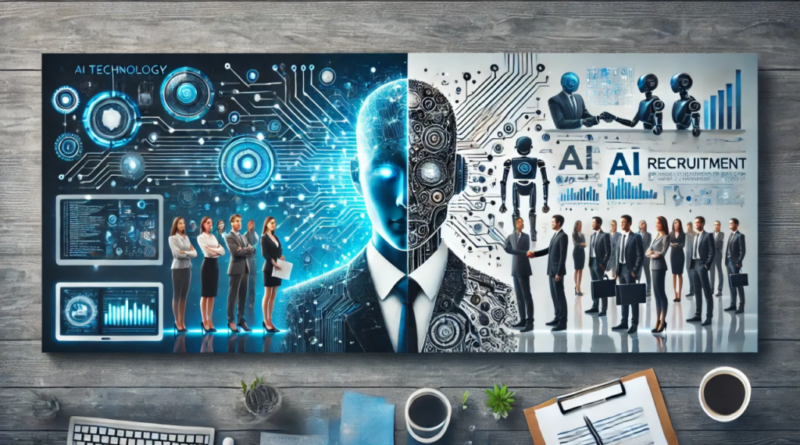
AI Pods for Enterprises: The Alternative to Traditional AI Hiring
 0
0
 0
0
Over the past few years, artificial intelligence has moved from experimentation to enterprise mandate. Boards expect automation. CIOs are asked to operationalize AI. Business units demand measurable returns. Yet, for many enterprises, execution lags behind ambition. The common response to rising AI demand has been straightforward: hire AI engineers.
However, hiring alone has not consistently translated into production-ready AI systems, scalable deployments, or measurable ROI. This is where a new operating model is emerging—AI pods for enterprises. Instead of building AI capability one hire at a time, enterprises are adopting structured, accountable teams designed specifically for AI delivery.
This article explores why traditional AI hiring struggles at scale and how AI pods are becoming a viable alternative.
The Enterprise AI Execution Gap
Enterprise leaders widely recognize AI’s potential. According to research published by McKinsey & Company, 88% of organizations report regular AI use in at least one business function in 2025, compared with 78% a year ago. Yet, significantly fewer report capturing meaningful financial impact from those deployments.
Similarly, studies from MIT indicate that 95% of generative AI initiatives fail to reach production or stall after pilot phases. This disconnect reflects a structural issue:
- AI projects require cross-functional execution (data engineering, ML modeling, deployment, and governance).
- Hiring one or two data scientists rarely solves end-to-end delivery.
- Internal teams often lack bandwidth or orchestration expertise.
Where Does Traditional AI Hiring Fall Short?
Today’s enterprises are not facing an AI strategy problem; they are facing an AI operating model problem. Hiring AI engineers remains important. However, relying exclusively on recruitment presents several challenges.

- Extended Hiring Timelines
AI talent is competitive; thus, AI initiatives lose momentum before they begin. Senior machine learning engineers, MLOps specialists, and AI architects are in short supply. Hiring cycles often exceed 60–90 days, particularly for specialized roles. During this time:
- Business requirements evolve.
- Executive urgency increases.
- Competitive pressure intensifies.
- Role Fragmentation
Enterprises often underestimate the ecosystem required for sustained AI performance. Hiring one data scientist does not address deployment, integration, or production monitoring. This is because AI delivery is multidisciplinary and typically requires:
- Data engineers
- Machine learning engineers
- Domain specialists
- DevOps or MLOps professionals
- QA and governance oversight
- Risk Concentration
The success of an AI project depends less on isolated expertise and more on coordinated execution. When AI capability rests on one or two individuals:
- Knowledge becomes siloed.
- Attrition risk increases.
- Delivery ownership is unclear.
- High Fixed Costs Without Guaranteed Output
AI hiring represents a significant fixed cost. Compensation packages for experienced AI professionals can exceed $150,000–$200,000 annually in the United States. Yet, employment alone does not guarantee production deployment or measurable business value.
What Are AI Pods, and How Do They Address the Hiring Issue?
AI pods are cross-functional teams formed to solve AI use cases with clear accountability and timelines. Unlike staff augmentation, where people are added to internal teams, AI pod solutions are more like self-contained units.
These solutions are more in line with contemporary product delivery methodologies and help to avoid the piece-meal nature of enterprise AI initiatives. Each pod consists of:
- Data engineering capability
- Machine learning expertise
- Deployment and MLOps support
- Project governance and delivery management
How Do AI Pods Differ from Traditional Models?
The defining feature of AI pods for enterprises is ownership. Pods are responsible not just for development, but for delivering a working AI system. To understand this better, it is useful to compare it with traditional operating models.
| Dimension | Traditional AI Hiring | AI Pod Solutions |
| Team Model | Individual hires added to internal teams | Cross-functional, pre-assembled delivery team |
| Time to Start | 60–90+ days hiring cycle | Immediate deployment |
| Delivery Ownership | Managed internally | Defined, accountable team ownership |
| Scope Coverage | Limited to specific role expertise | End-to-end AI lifecycle coverage |
| Time to Production | Often delayed by coordination gaps | Structured, production-focused timelines |
| Cost Structure | Fixed salary regardless of output | Flexible, outcome-aligned engagement |
| Scalability | Requires additional hiring | Add pods as use cases expand |
Key Benefits of AI Pods for Enterprises
AI pods are gaining popularity as a direct reaction to the persistent delivery gaps that badly affect enterprise AI initiatives. Below are five benefits of using AI pods for enterprises.
- Accelerated Time-to-Value
Speed is one of the most essential elements of AI success. Many enterprise AI projects tend to slow down during the lengthy hiring process, internal planning, or pilot project phases. AI pods are built with pre-defined cross-functional skills from the very beginning. This helps to accelerate the process of transitioning from use case development to production.
Accelerated AI execution helps to:
- Faster validation of ROI
- Reduced pilot stagnation
- Quicker executive confidence in scaling AI
- Clear Delivery Accountability
Enterprise AI projects tend to slow down due to lack of clear ownership among various departments. When multiple internal teams are involved, ownership tends to get watered down. AI pod solutions bring in clear scope, organized milestones, and centralized ownership of execution.
This helps to ensure that ownership is not spread across data, engineering, and business teams. For enterprise leaders, this brings in increased transparency, organized progress tracking, and minimized operational uncertainty.
- Cross-Functional Integration by Design
AI deployment is a multi-functional process. Successful deployment requires synchronized efforts of data engineering, machine learning modeling, infrastructure, security, and business teams. Traditional hiring often addresses these needs incrementally.
AI pods, however, embed these capabilities into a unified delivery unit. Enterprises working with an AI/ML development company gain structured integration from the start, reducing friction between departments and improving deployment reliability.
- Reduced Talent Dependency Risk
Relying on one or two high-cost AI hires can create operational vulnerability. Attrition, bandwidth constraints, or skill misalignment can significantly delay AI programs. AI pods distribute expertise across a coordinated team. This reduces reliance on individual contributors and improves continuity.
When working with a trusted AI development company in the USA, businesses can also leverage talent ecosystems and scalable capacity without the need for long-term hiring.
- Flexible and Scalable Investment Model
Enterprise AI projects can be dynamic and change over time. A use case may start as a pilot project and then grow into a bigger transformation project. AI pods offer flexibility in terms of financial and operational investments.
Rather than investing in a permanent headcount right away, businesses can match the scope of engagement with specific outcomes. This approach enables:
- Phased transformation
- Controlled experimentation
- Easier expansion into additional use cases
In Conclusion
Hiring in the traditional sense remains an important part of the equation, but it may not necessarily solve the issues of coordination, accountability, and speed that come with AI adoption. AI pod solutions provide a different approach—one that is based on structured execution, cross-functional talent, and specific outcomes. So, the future of enterprise AI is not just about intelligent machines but also about smarter and leaner teams. It’s about AI pods for enterprises.
Artificial Intelligence – The Data Scientist