
How to Automate Financial Statement Spreading With AI for Faster Analysis?
 0
0
 0
0
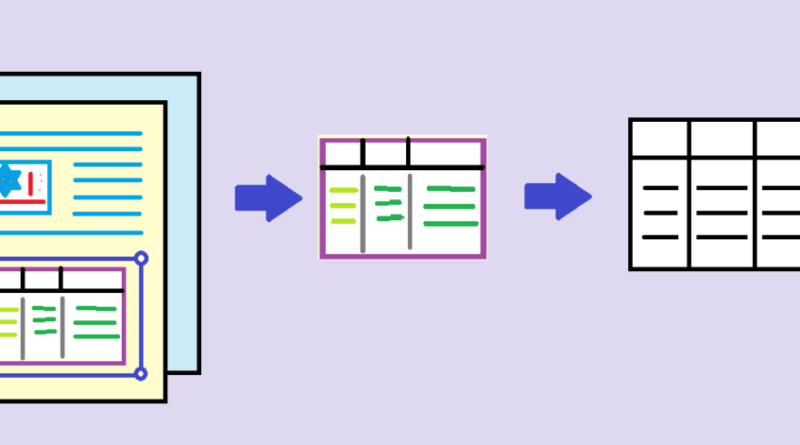
Financial Statement Spreading in the business of commercial lending, credit risk evaluation, and investment banking is an ontological yet conventionally painful undertaking. It entails the process of extracting information from the balance sheets, income statements, and cash flow reports to fill a standardized template in order to conduct trend analysis. In the old days, this used to require hours of manual data entry of different PDF formats into Excel. Nonetheless, in 2026, Artificial Intelligence (AI) has reached the stage of eliminating this clerical bottleneck: Advanced OCR, Natural Language Processing (NLP), and Computer Vision has turned this into a rapid analytical engine.
1. Process Transformation: The Manual to Automated Extraction Evolution
The main problem with financial spreading is the inability to be uniform. All corporations are different in the way they display financial information, with many providing unique line-item descriptions or otherwise non-standardized subtotals. Automation in this case failed traditionally as it was based on templates. The financial spreading software nowadays does not rely on these strict designs with the help of Machine Learning (ML) models that are trained on millions of financial reports. These models are not only able to see text, but they are also aware of the accounting background. Learning how to recognize the connection between assets, liabilities, and equity, AI would be capable of plotting the various data elements to a single COA (Chart of Accounts) without human interference.
2. Technical Architecture: In-depth: The Underlying Technologies of AI Spreading
In order to obtain almost flawless data extraction, AI systems use a stack of technology. This is to allow documents that are noisy, like low-resolution scans or unusual layouts, to be correctly parsed.
The AI Spreading Tech Stack:
- Advanced OCR (Optical Character Recognition): Turns pixels into machine-readable text, keeping the spatial awareness needed to distinguish between columns and rows.
- Computer Vision (CV): Examines the structure of the document. It detects table boundaries, merging of cells and indentation, which is significant in decoding nested financial hierarchy.
- NLP and Semantic Mapping: Applies Large Language Models (LLMs) to learn that: Cash and Equivalents and Liquid Assets are used more interchangeably than not, and thus can be auto-mapped.
- Rule-Based Validation: The last layer, which conducts mathematical validation (e.g. Total Assets should match Total Liabilities + Equity), to indicate extraction errors to human beings.
3. Structural Parsing: Table Extraction Problem Solution with Machine Learning

The standard software finds it notoriously hard to extract tables since financial statements have tables that are frequently borderedless or multi-line descriptions. Table Transformer models are now used in AI-based financial analytics. These neural networks are conditioned to identify the structural indicators of a monetary table. They are able to differentiate a header, a subtotal or a data cell when the visual marks are few. Making the document a grid of coordinates, the AI is able to specifically extract data in complicated, multi-column reports that otherwise would bog down older automation systems.
4. Data Standardization: Normalization and Intelligent Chart of Accounts (COA)
The first half is the extraction, the other half is the normalization. Various companies have varied nomenclature for the same financial concepts. The aspect of the spreads is automated in the AI, which intelligently classifies these line items into a standardized format.
Normalization Capabilities of AI:
- Contextual Mapping: AI will tell the difference between operations and debt-based interest expense, which will be properly used to calculate the EBITDA.
- Trend Alignment: Trend alignment automatically aligns fiscal years, even where a company has switched its reporting period, and lets a historical comparison between the companies proceed on a like basis.
- Currency Conversion: Current AI models are able to identify the currency in which the information is reported and convert it to a base currency with real-time or historical exchange rates.
5. Underwriting Efficiency: Improving Credit Analysis through Spreading in Real-Time
The competitive advantage in commercial lending is speed to lead. When a credit officer can display five years of financial statements in few seconds instead of days the whole underwriting cycle is sped up. Pre-flight risk checks can be used with automated spreading, in which the viability of a deal is checked as soon as the documents are uploaded. Moreover, the fact that AI is capable of processing data in real-time means that it can offer real-time monitoring of the financial health of a borrower, indicating covenant violation or liquidity runs well before the next formal audit.
6. Hybrid Oversight: The Data Integrity Role of Human-in-the-Loop (HITL)
Although AI is powerful, the edge cases of the Quiet Luxury of high-end financial analysis still have to be handled manually. The best quality automated systems have a Human-in-the-Loop (HITL) interface. When the AI comes across an ambiguous line entry or a mathematical error, it will point out this particular cell to review by an analyst. This is a hybrid solution that will guarantee a 100% integrity of the data and at the same time will minimize the amount of manual work by more than 90 percent. The AI is instructed through these human corrections, and it keeps on getting better in terms of mapping accuracy in future statements of the same industry or region.
7. Deep Analytics: Breakthroughs in Data Science: Generative Artificial Intelligence and Synthetic Data
The most recent application of AI-based financial analytics is use of Generative AI to process unstructured Notes to the Financial Statements. In many cases, the most sensitive items of data (like off-balance-sheet liabilities or a detailed debt maturity schedule) are lost in the text of the footnotes.
High-Tech NLP Footnote Analysis:
- Covenant Extraction: The text scanning and the search of the text in search of certain debt covenants, and the comparison with the extracted numbers.
- Sentiment Analysis: The tone of the Management Discussion and Analysis (MD&A) can be reviewed to identify some underlying changes in corporate confidence.
- Automated Footnote Cross-Referencing: Clicking a line on the balance sheet into the corresponding explanation so that the sheet can be audited instantly.
8. Enterprise Integration: Scalability and Modularity into Contemporary ERPs
The capability to scale is essential in case of global businesses and huge financial organizations. AI-powered spreading is not a silo in its own right; it is an API-first product that pipes straight into other larger Risk Management Systems (RMS) and ERPs. The digitization of the spreading process allows firms to read thousands of financial statements in various languages and adhere to various accounting standards in a day (IFRS vs. GAAP). This provides an enormous searchable database of financial intelligence, which was formerly locked up in PDF files that were dead, to allow sophisticated macro-economic modeling and peer group benchmarking.
Setting the New Standards of Financial Analytics
The move to the automation of financial services by AI is not just a convenience, but a strategic requirement of the 2026 financial environment. With the combination of Computer Vision, OCR, and Deep Learning, companies will be able to get rid of the tedious process of data entry and shift towards the high-value decision-making process. With the complex financial spreading software integrated into their operations, organizations obtain the opportunity to study risk in a way that it never could have been previously, that is, converting raw documents into a potent source of development and stability of the institution.
Artificial Intelligence – The Data Scientist